|
|
|||
|
||||
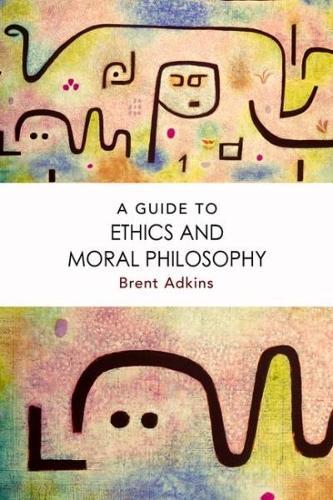
OverviewHow should we live? How should we act? How might we live? These are the three questions of moral philosophy. Brent Adkins traces the history of ethics and morality by examining six thinkers: Aristotle, Spinoza, Kant, Mill, Nietzsche and Levinas. The book is divided into 3 sections Ethics, Morality and Beyond. Two thinkers are paired in each section to show you how the important questions of moral philosophy have been answered so that you might better answer them for yourself. You'll learn what the philosophers actually said about how to live the best kind of life and, more importantly, why. Full Product DetailsAuthor: Brent Adkins (Professor of Philosophy, Roanoke College)Publisher: Edinburgh University Press Imprint: Edinburgh University Press Dimensions: Width: 13.80cm , Height: 1.50cm , Length: 21.60cm Weight: 0.346kg ISBN: 9781474422772ISBN 10: 1474422772 Pages: 184 Publication Date: 19 April 2017 Audience: Professional and scholarly , Professional & Vocational Format: Hardback Publisher's Status: Active Availability: Manufactured on demand We will order this item for you from a manufactured on demand supplier. Table of ContentsGlossaryTimeline Introduction: Three Questions Part I: EthicsHow Should We Live? Aristotle and Spinoza1. Aristotle: Happiness is the Good 2. Aristotle: Virtue and the Highest Happiness 3. Spinoza: The Universe and Power 4. Spinoza: Emotions and Freedom Part II: MoralityHow Should We Act? Kant and Mill5. Kant: Happiness is not the Good 6. Kant: The Categorical Imperative 7. Mill: Happiness is Pleasure 8. Mill: The Greatest Happiness for the Greatest Number Part III: BeyondHow Might We Live? Nietzsche and Levinas9. Nietzsche: These are the Wrong Questions 10. Nietzsche: Morality and Power 11. Levinas: Philosophy and Appropriation 12. Levinas: Ethics and the Other Conclusion: Beyond Beyond Suggestions for Further Reading Bibliography IndexReviewsBrent Adkins has written a really good introductory textbook which includes a more critical approach to ethics. The 12-chapter structure is perfect for the average semester.--Stefan Bird-Pollan, University of Kentucky This textbook will be terrific for undergraduate students of philosophy but also for students from other disciplines where ethics, both from the historical and practical perspective, is taught.--Fredrika Spindler, Williams College This textbook will be terrific for undergraduate students of philosophy but also for students from other disciplines where ethics, both from the historical and practical perspective, is taught. -- Fredrika Spindler, Williams College Brent Adkins has written a really good introductory textbook which includes a more critical approach to ethics. The 12-chapter structure is perfect for the average semester. -- Stefan Bird-Pollan, University of Kentucky Author InformationBrent Adkins is Professor of Philosophy at Roanoke College. He is the author of A Guide to Ethics and Moral Philosophy (Edinburgh University Press, 2017, Deleuze and Guattari’s A Thousand Plateaus: A Critical Introduction and Guide (Edinburgh University Press, 2015), Rethinking Philosophy and Theology with Deleuze: A New Cartography (Bloomsbury, 2013), True Freedom: Spinoza’s Practical Philosophy (Lexington Books, 2009) and Death and Desire in Hegel, Heidegger, and Deleuze (Edinburgh University Press, 2007). Tab Content 6Author Website:Countries AvailableAll regions |
||||