Awards
- Winner of de La Torre Bueno Prize 2007
Overview
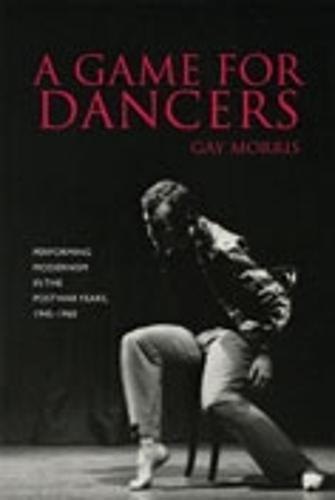
A Game for Dancers examines the difficulties American modern dancers faced as the Cold War took hold and the genre became institutionalized after its pioneering phase. It draws on the sociology of Pierre Bourdieu to explore the interconnections between art and politics while paying close attention to modern dance's ambivalent relationship to the market. At the heart of the book is an inquiry into modernism itself, and how dancers struggled with modernist ideas of abstraction and autonomy while rarely questioning them. Crucial, too, is the issue of embodiment, which appeared to answer modernist skepticism of representation and aid modern dance's elusive pursuit of independence. Subjects include modernist dance theory, the emergence of new constituencies including African-American choreographers, and the work of Merce Cunningham and Alwin Nikolais, whose objectivism was declared a new modern dance vanguard in the 1950s.
Full Product Details
Author: Gay Morris
Publisher: Wesleyan University Press
Imprint: Wesleyan University Press
Dimensions:
Width: 15.20cm
, Height: 2.00cm
, Length: 22.90cm
Weight: 0.431kg
ISBN: 9780819568052
ISBN 10: 0819568058
Pages: 288
Publication Date: 26 May 2006
Audience:
College/higher education
,
Undergraduate
Format: Paperback
Publisher's Status: Active
Availability: Awaiting stock

The supplier is currently out of stock of this item. It will be ordered for you and placed on backorder. Once it does come back in stock, we will ship it out for you.
Reviews
A Game for Dancers is a vital contribution to the literature of the field. --Victoria Phillips Geduld, Dance Research Journal
This valuable book unearths a new perspective on dance in New York, a perspective based on attitudes, actions, aesthetics, and definitions of dance by major choreographers and dance writers/theorists and on the ways they dealt with broad cultural and social issues. Morris looks at the evolving new form of dance drama; modern dancers fighting against the commercialization of Broadway and Hollywood; dancers' interest (or lack of interest) in developing their own personal style and vocabulary; narrative versus abstract corporal movement; and new ballets by George Balanchine, Anthony Tudor, Agnes de Mille, and Jerome Robbins challenging modern dance's vanguard position. Especially significant are Morris's insightful analyses and interpretations of the writings of John Martin, Edwin Denby, and John Cage and their faith in the corporal intelligence of dance; of how Anna Sokolow, Sophie Maslow, and the New Dance Group Company tried to embody minority communities and identity in their dances; of how Ronnie Aul and Donald McKayle gained greater access while still losing ground in discrimination and stereotyping; and of the demanding objectivism of Merce Cunningham and Alwin Nikolais and 'the right of dancing to be its own subject matter.' --Choice
Author Information
Gay Morris is a dance and art critic whose work has appeared in numerous publications, including Dance Research, Art in America, and Body and Society. Currently she is a research fellow in sociology at Goldsmiths College, University of London. She is the editor of the anthology, Moving Words, Rewriting Dance (1996), and will be living in New York City in 2006.