Overview
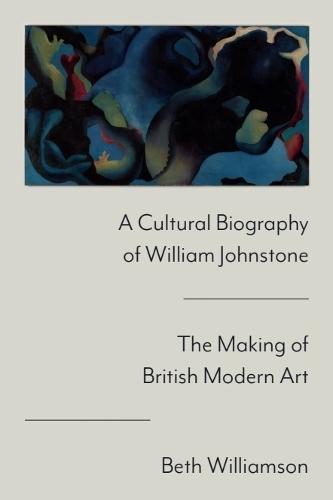
Scottish artist William Johnstone (18971981) has been significantly overlooked in the histories of British modernism, yet his role as the progressive Principal of Camberwell School of Arts and Crafts and subsequently the Central School of Arts and Crafts in London helped shape the the work and careers of artists such as Richard Hamilton, Victor Pasmore, Nigel Henderson, Alan Davie and Eduardo Paolozzi. Drawing directly on Johnstone's personal archive as well as a range of newly researched primary sources, Beth Williamson studies Johnstone's ideas and his artworks within the context of his working relationships with other important British artists of the period. His dialogues with significant thinkers in the wider cultural field serve to illuminate these intellectual debates in a lively way. Williamson considers these important relationships against the background of Johnstone's thinking and theirs, examining key texts, artworks, and moments in British art and art education in an international context, revealing Johnstone's intellectual formation considering its significance then and now.
Full Product Details
Author: Beth Williamson
Publisher: Edinburgh University Press
Imprint: Edinburgh University Press
ISBN: 9781399540513
ISBN 10: 1399540513
Pages: 320
Publication Date: 28 February 2026
Audience:
Professional and scholarly
,
Professional & Vocational
Format: Hardback
Publisher's Status: Forthcoming
Availability: Not yet available

This item is yet to be released. You can pre-order this item and we will dispatch it to you upon its release.
Reviews
William Johnstone was not only one of Scotland's most important twentieth century painters but also one of England's most significant art educators. Johnstone's contribution demands proper reassessment, and this invaluable book does just that, illuminating his work both as an artist and as a leader of higher education.--Murdo Macdonald, University of Dundee
William Johnstone was not only one of Scotland’s most important twentieth century painters but also one of England’s most significant art educators. Johnstone’s contribution demands proper reassessment, and this invaluable book does just that, illuminating his work both as an artist and as a leader of higher education. -- Murdo Macdonald, University of Dundee Beth Williamson takes us from Johnstone’s boyhood in the Borders and his associations with the major ecological thinker Patrick Geddes, from Edinburgh to Paris in the 1920s, then having established his loyalties as a Scot and a European, we travel with him to America and his encounter with Native American visual arts and abstractions in the 1930s and 1940s. Williamson’s elucidation of the thinking behind and within the abstracts such as ‘A Point in Time’ is brilliant. Lucid, incisive, and unafraid of using difficult words and ideas to contextualise the expositions of Johnstone’s paint and ink on canvas and paper. Beth Williamson’s book helps us see how William Johnstone’s work shows us what makes being alive truly worthwhile. -- Alan Riach, University of Glasgow Meticulously researched and beautifully written, this new study of William Johnstone is much more than a fresh biography of the artist. It provides a lens through which many of the complexities of British modernism are revealed and is nothing less than a major contribution to the study of twentieth-century cultural politics. -- Elizabeth Cumming, The University of Edinburgh William Johnstone was an energetic, charismatic and influential Scot. Pioneer of radical modern ideas in his painting, as a teacher he transformed art education in England, but hitherto there has been no full account of his life and achievements. Beth Williamson has now filled that egregious gap with a wide-ranging and thoroughly well-researched account of his remarkable career. -- Duncan Macmillan, The University of Edinburgh
Author Information
Beth Williamson is an independent art historian. From 2009 to 2014 she was a Research Fellow at Tate. Her research is focused on the history of British art education, particularly in the post-war period. Previous sole authored publications include Between Art Practice and Psychoanalysis Mid-Twentieth Century: Anton Ehrenzweig in Context (Ashgate, 2015) and the co-edited volume The London Art Schools: Reforming the Art World, 1960 to Now (Tate Publishing, 2015).