Awards
Overview
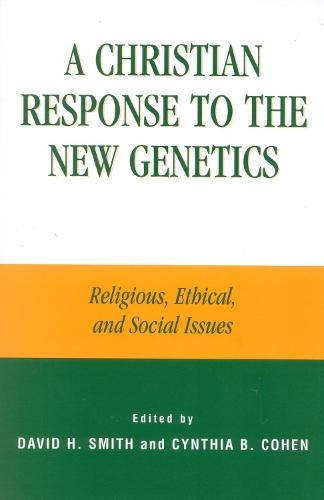
Life is a gift that includes powers to be used and celebrated, but that doesn't necessarily justify the use of every new power that comes along. This volume appeals to both secular and religious readers in the centre of the great debate over our new genetic powers. These essays affirm many traditional Christian perspectives and virtues, while also introducing new insights. The authors explore a broad range of topics, including genetic testing, gene transfer, genetic manipulation, patenting, health insurance and the moral status of embryos. They conclude that it is naive to either to reject outright or wholeheartedly embrace the new genetic powers. In fact, sometimes the best we can expect is to learn how to cope with moral uncertainty.
Full Product Details
Author: David H. Smith ,
Cynthia B. Cohen ,
David A. Ames ,
Mary R. Anderlik
Publisher: Bloomsbury Publishing Plc
Imprint: Rowman & Littlefield
Dimensions:
Width: 15.50cm
, Height: 1.70cm
, Length: 23.50cm
Weight: 0.386kg
ISBN: 9780742514980
ISBN 10: 0742514986
Pages: 208
Publication Date: 18 June 2003
Audience:
General/trade
,
General
Format: Hardback
Publisher's Status: Active
Availability: In Print

This item will be ordered in for you from one of our suppliers. Upon receipt, we will promptly dispatch it out to you. For in store availability, please contact us.
Reviews
This book can be recommended for anyone wanting an up-to-date discussion of recent developments in human genetics and their implications for Christian believers. Science and Christian Belief [An] exceedingly useful and timely collection of essays... This book should be required reading for all Episcopal clergy, seminarians, and Clinical Pastoral Education students, and for laypersons involved in church policies and practices related to genetics and the pastoral care of individuals and families affected by genetic diseases. It would be a tremendous asset to bioethics curricula in Episcopal and nondenominational seminaries; it is not hard to imagine planning an entire course around the issues and themes presented in this book. It will also be useful in secular academic settings, as a resource for helping medical students and others in the sciences understand how scholars working within a religious tradition look at the science and ethics of genetic technologies. It would be unfortunate if the title were misunderstood. This volume is not simply of interest to Christians, but it is certainly a welcome antidote to the limitations of That Phrase. Well done. Medical Humanities
This book can be recommended for anyone wanting an up-to-date discussion of recent developments in human genetics and their implications for Christian believers. Science and Christian Belief [An] exceedingly useful and timely collection of essays... This book should be required reading for all Episcopal clergy, seminarians, and Clinical Pastoral Education students, and for laypersons involved in church policies and practices related to genetics and the pastoral care of individuals and families affected by genetic diseases. It would be a tremendous asset to bioethics curricula in Episcopal and nondenominational seminaries; it is not hard to imagine planning an entire course around the issues and themes presented in this book. It will also be useful in secular academic settings, as a resource for helping medical students and others in the sciences understand how scholars working within a religious tradition look at the science and ethics of genetic technologies. It would be unfortunate if the title were misunderstood. This volume is not simply of interest to Christians, but it is certainly a welcome antidote to the limitations of That Phrase. Well done. Medical Humanities Review
Author Information
David H. Smith is director of the Poynter Center at Indiana University and chair of the Episcopal Church's Task Force on Ethics and the New Genetics. Cynthia B. Cohen is senior research fellow at the Kennedy Institute of Ethics at Georgetown University.