Overview
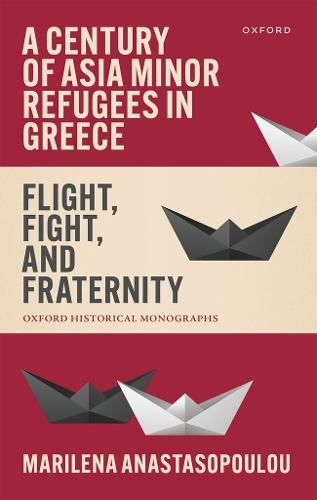
This book is a comparativeDLintergenerational and interregionalDLhistory of Asia Minor memories and identities of forced displacement that examines the multilayered relationship between contemporary attitudes and refugee past. In light of the centenary of the Asia Minor population transfer and the current migration and refugee crises, this study explores refugee memories and identities of expulsion, their intergenerational transmission, and the way that people with these memories think about subsequent migrations. While focusing on the case of Greece, the questions that this book addresses are: How have memories of the 1922-24 forced displacement changed over time from one generation to the next? How do people with these memories and identities think about subsequent migration? Following a regional history approach and an oral history approach, this study draws upon literature from several disciplines and rests upon oral testimony. Specifically, it employs a methodology of collecting primary sources using oral testimonies (262 life history interviews) and archival evidence (5000 oral testimonies) based on three regional case studies, namely the borderland island of Lesvos, Central Macedonia in northern Greece, and Attica. This book argues that refugee identity is a capacious and dynamic platform of ongoing understanding as well as a limited space of domination and competition. Elucidating the attitudes of refugee descendants and unfolding key patterns about the complex role of refugee memory and identity, it brings together the intersection of three interlocking elements: time (refugee generations), place (refugee locations), and subsequent migration (waves of other migrations). In short, A Century of Asia Minor Refugees in Greece sheds light on the convoluted relationship between contemporary attitudes and refugee past, providing a nuanced history of the 1922-24 memories and identities of forced displacement. An open access title available under the terms of a CC BY-NC-ND 4.0 licence.
Full Product Details
Author: Marilena Anastasopoulou (Lecturer in History, University of Oxford, Research Associate, South East European Studies, SEESOX, Oxford, and Research Associate, Hellenic Observatory, LSE)
Publisher: Oxford University Press
Imprint: Oxford University Press
Dimensions:
Width: 14.50cm
, Height: 2.40cm
, Length: 22.40cm
Weight: 0.492kg
ISBN: 9780198970989
ISBN 10: 0198970986
Pages: 304
Publication Date: 19 February 2026
Audience:
College/higher education
,
Postgraduate, Research & Scholarly
Format: Hardback
Publisher's Status: Active
Availability: To order

Stock availability from the supplier is unknown. We will order it for you and ship this item to you once it is received by us.
Author Information
Marilena Anastasopoulou, a historian of modern migration, is a Lecturer in History at the University of Oxford and a Research Associate at SEESOX and the LSE's Hellenic Observatory. Her research explores the way migration forms memories, identities, and attitudes. Funded by the Onassis Foundation and ESRC, her work has received prestigious academic awards. Dr Anastasopoulou holds a DPhil in History and an MSc in Migration Studies from the University of Oxford. She has served as an ESRC Postdoctoral Fellow at LSE, a Postdoctoral Researcher at Oxford, and an award-winning Lecturer at Pembroke College and the Faculty of History at Oxford.