Overview
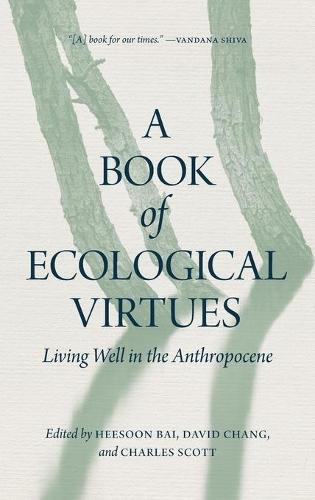
For readers of The Sixth Extinction, a manifesto for meaningfully confronting our role in climate change and committing to sustainable, eco-friendly living during an era irrevocably marked by human activity. Despite our brief tenure on planet Earth, Homo sapiens have caused an epoch of climate change and declining ecological diversity: the Anthropocene. This age has been singularly defined by humans' unique and unprecedented ability to destroy our only habitat. In the face of global warming and animal extinction, it is vitally important we collectively turn toward the cultivation of eco-virtues—a new set of values by which to live—if there is to be any hope for us and other species to continue to exist. Within this collection are Nunavut hunters, religious theologists, acclaimed academics and poets—including writing by philosopher and poet Jan Zwicky recently deemed a seminal text on climate change by The Guardian . The contributors bring a wide breadth of perspectives from diverse realms of philosophy, culture, belief, and writing style. A Book of Ecological Virtues: Living Well in the Anthropocene speaks to humanity's mortality and transience within the study of ecology, including the environmental ramifications of longer life, improved medicine and treatments, and even funeral rites. It is a philosophical and timely collection of essays on how we can embody a more sustainable future through daily action and habit change. ""A significant contribution to eco-philosophy, and to our collective discourse on the human-nature relationship.""— Laura Sewall , author of Sight and Sensibility: The Ecopsychology of Perception
Full Product Details
Author: Heesoon Bai ,
David Chang ,
Charles Scott
Publisher: University of Regina Press
Imprint: University of Regina Press
Dimensions:
Width: 15.30cm
, Height: 2.30cm
, Length: 22.90cm
Weight: 0.600kg
ISBN: 9780889777620
ISBN 10: 0889777624
Pages: 304
Publication Date: 03 October 2020
Audience:
General/trade
,
Professional and scholarly
,
General
,
Professional & Vocational
Format: Hardback
Publisher's Status: Active
Availability: Available To Order

We have confirmation that this item is in stock with the supplier. It will be ordered in for you and dispatched immediately.
Reviews
A significant contribution to eco-philosophy, and to our collective discourse on the human-nature relationship. Laura Sewall , author of Sight and Sensibility: The Ecopsychology of Perception A Book of Ecological Virtues is a book for our timesto help us recognize that the extinction crisis we face is a consequence of seeing ourselves as separate from nature and other beings. Ecological Virtues is a remembrance that we are of the earth, we are animals, we are biological beings, nourished by other beings. Caring for others is our ecological duty and the path to our own well-being. Vandana Shiva , author of Stolen Harvest and Reclaiming the Commons A tour de force [that] addresses morality and sustainable futures for humanity. Diverse scholarly perspectives, using a variety of representations, raise issues concerning transformation of human lifestyles and interactions with living and nonliving constituents of fragile ecosystems. Educating a citizenry to act with heightened awareness, compassion, and love are among issues addressed throughout the book. Also, engaging critical dialogues around issues such as death and extinction are raised in a context of how to act courageously, with overt consciousness and an ethic of giving back. The book is captivating, thought-provoking, and forward lookingan amazing graduate text, and an interesting read for a diverse variety of educators, researchers, and policymakers. Kenneth Tobin , editor of Mindfulness in Education This well-researched, well-written, and pertinent essay collection invites new conversations. It needs to be read, savoured and shared. The Ormsby Review
A significant contribution to eco-philosophy, and to our collective discourse on the human-nature relationship. Laura Sewall , author of Sight and Sensibility: The Ecopsychology of Perception A Book of Ecological Virtues is a book for our timesto help us recognize that the extinction crisis we face is a consequence of seeing ourselves as separate from nature and other beings. Ecological Virtues is a remembrance that we are of the earth, we are animals, we are biological beings, nourished by other beings. Caring for others is our ecological duty and the path to our own well-being. Vandana Shiva , author of Stolen Harvest and Reclaiming the Commons A tour de force [that] addresses morality and sustainable futures for humanity. Diverse scholarly perspectives, using a variety of representations, raise issues concerning transformation of human lifestyles and interactions with living and nonliving constituents of fragile ecosystems. Educating a citizenry to act with heightened awareness, compassion, and love are among issues addressed throughout the book. Also, engaging critical dialogues around issues such as death and extinction are raised in a context of how to act courageously, with overt consciousness and an ethic of giving back. The book is captivating, thought-provoking, and forward lookingan amazing graduate text, and an interesting read for a diverse variety of educators, researchers, and policymakers. Kenneth Tobin , editor of Mindfulness in Education This well-researched, well-written, and pertinent essay collection invites new conversations. It needs to be read, savoured and shared. The Ormsby Review What makes the collective distinctive is its diversity of voices, experiences and approaches. In this way the anthology seeks a wider audience than more traditional philosophical collections. Environmental Values
A significant contribution to eco-philosophy, and to our collective discourse on the human-nature relationship. Laura Sewall , author of Sight and Sensibility: The Ecopsychology of Perception
Author Information
Heesoon Bai is Professor in Philosophy of Education in the Faculty of Education at Simon Fraser University. She teaches and researches in: epistemology and education, ethics and moral education, Foundations of education, and contemplative approaches to education. Heesoon Bai lives in Vancouver. David Chang is a teacher educator, and PhD candidate in the Faculty of Education at Simon Fraser University. He researches contemplative approaches to environmental education. David Chang lives in Vancouver. Charles Scott is Associate Professor of Education at City University in Canada and an Adjunct Professor in the Faculty of Education at Simon Fraser University. His scholarly areas of research and teaching are contemplative inquiry in education; curriculum, pedagogy, and assessment; dialogue in education; and spirituality in education. Charles Scott lives in Vancouver.