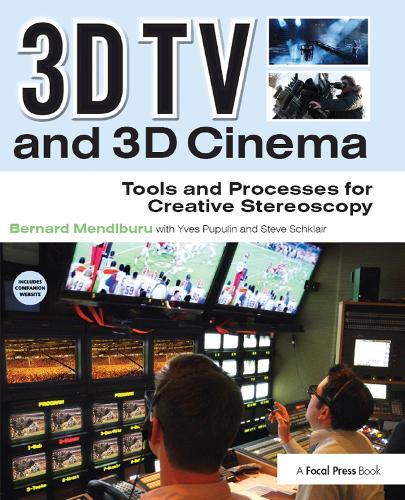
Overview
Learn how to adapt your cinematography and production skills to this growing medium and be part of the movement.Master the unique technical requirements of shooting 3D stereoscopic images. 3DTV and 3D Cinema defines the concept of a professional 3D camera system and describes what features are required to make a successful unit to keep your production on schedule and on budget. You will learn how to work with the complex hardware and software systems, with a section dedicated to the specific requirements of shooting for 3D cinema. 3D conversions, keying, and CG processes are analyzed, as well as the essential staging, lighting, set dressing, framing, and camera movement techniques. The theoretical knowledge is complemented with real-world examples of 3D TV and cinema productions that are analyzed by crew members or producers.
Full Product Details
Author: Bernard Mendiburu
Publisher: Taylor & Francis Ltd
Imprint: Routledge
Weight: 0.650kg
ISBN: 9781138400597
ISBN 10: 1138400599
Pages: 280
Publication Date: 29 June 2017
Audience:
Professional and scholarly
,
Professional & Vocational
Format: Hardback
Publisher's Status: Active
Availability: In Print

This item will be ordered in for you from one of our suppliers. Upon receipt, we will promptly dispatch it out to you. For in store availability, please contact us.
Reviews
"""The book covers many aspects of 3D picture making, stressing the vital importance of getting everything 'just right' if the results are going to be acceptable to audiences, but also stressing that it is important to be able to shoot and process 3D images quickly and efficiently if 3D is to become a standard part of the domestic TV viewing process in the near future. There are lots of useful 'lessons learned' snippets from people experienced in making 3D programmes, with many interesting opinions from practitioners. 3D TV and 3D Cinema - tools and processes for creative stereoscopy is a book which will be of interest to many readers of Cinema Technology magazine, providing much useful background information about the making of 3D movies and TV programmes.""--CinemaTechnologyMagazine.com ""Before 2010, 3D filmmakers were afraid bad content would hit screens and drive audience away. With a surprising and positive twist, bad conversions educated viewers about the difference between 3D conversions and 3D filming. The deployment of the 3D medium has always been a chicken-and-egg problem between display and content. With this book, you will learn how to adapt your cinematography and production skills to this growing medium and be part of the movement. You will master the unique technical requirements of shooting 3D stereoscopic images. The theoretical knowledge is complemented with real-world examples of 3D TV and cinema productions that are analyzed by crew members or producers.""--WetPaint.com ""Throughout 3D TV and 3D Cinema, Mendiburu brings in commentaries by other authorities on stereoscopic filmmaking that broaden the perspective of the book and share specific production experiences. This approach reaches its full fruition in the book's final chapter, 'Stereoscopic Experience from the Front Lines,' which consists entirely of in-depth interviews and essays exploring complex theoretical and practical approaches to 3D cinematography. The wildly varying quality of current 3D productions and postconversions has inspired raging debate among audiences and professionals alike, but it is clear from this collection of writings the technical and artistic means to create great 3D art exist if only filmmakers educate themselves. Anyone interested in beginning such an education would be wise to find a place on the bookshelf for Mendiburu's volume.""--TheASC.com"
The book covers many aspects of 3D picture making, stressing the vital importance of getting everything 'just right' if the results are going to be acceptable to audiences, but also stressing that it is important to be able to shoot and process 3D images quickly and efficiently if 3D is to become a standard part of the domestic TV viewing process in the near future. There are lots of useful 'lessons learned' snippets from people experienced in making 3D programmes, with many interesting opinions from practitioners. 3D TV and 3D Cinema - tools and processes for creative stereoscopy is a book which will be of interest to many readers of Cinema Technology magazine, providing much useful background information about the making of 3D movies and TV programmes. --CinemaTechnologyMagazine.com Before 2010, 3D filmmakers were afraid bad content would hit screens and drive audience away. With a surprising and positive twist, bad conversions educated viewers about the difference between 3D conversions and 3D filming. The deployment of the 3D medium has always been a chicken-and-egg problem between display and content. With this book, you will learn how to adapt your cinematography and production skills to this growing medium and be part of the movement. You will master the unique technical requirements of shooting 3D stereoscopic images. The theoretical knowledge is complemented with real-world examples of 3D TV and cinema productions that are analyzed by crew members or producers. --WetPaint.com Throughout 3D TV and 3D Cinema, Mendiburu brings in commentaries by other authorities on stereoscopic filmmaking that broaden the perspective of the book and share specific production experiences. This approach reaches its full fruition in the book's final chapter, 'Stereoscopic Experience from the Front Lines,' which consists entirely of in-depth interviews and essays exploring complex theoretical and practical approaches to 3D cinematography. The wildly varying quality of current 3D productions and postconversions has inspired raging debate among audiences and professionals alike, but it is clear from this collection of writings the technical and artistic means to create great 3D art exist if only filmmakers educate themselves. Anyone interested in beginning such an education would be wise to find a place on the bookshelf for Mendiburu's volume. --TheASC.com
Author Information
Bernard Mendiburu is a stereographer and digital cinema consultant working with feature animation studios in Los Angeles, where his credits include Meet The Robinsons” and Monsters vs Aliens”. The author of 3D Movie Making” (Focal Press) he recently joined the 3D@Home Consortium's Advisory Committee on 3D Quality and was an active member of the SMPTE 3D Task Force. Bernard's lectures and workshops on 3D cinema were selected by CalArt's Experimental Animation department and Laika Entertainment (Coraline). In 2009, Bernard presented a paper on 3D Workflows at the SPIE Stereoscopic Display and Applications conference and at the NAB's Digital Cinema Summit, and a two-day long workshop on 3D postproduction the Paris' Dimension3 conference.