Overview
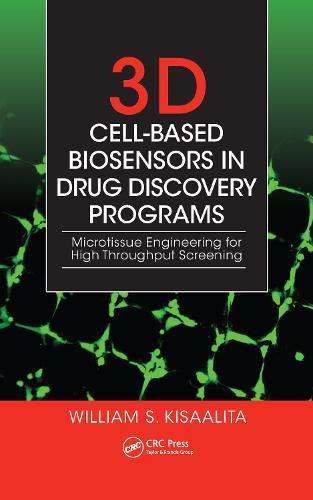
Advances in genomics and combinatorial chemistry during the past two decades inspired innovative technologies and changes in the discovery and pre-clinical development paradigm with the goal of accelerating the process of bringing therapeutic drugs to market. Written by William Kisaalita, one of the foremost experts in this field, 3D Cell-Based Biosensors in Drug Discovery Programs: Microtissue Engineering for High Throughput Screening provides the latest information -- from theory to practice -- on challenges and opportunities for incorporating 3D cell-based biosensors or assays in drug discovery programs. The book supplies a historical perspective and defines the problem 3D cultures can solve. It also discusses how genomics and combinatorial chemistry have changed the way drug are discovered and presents data from the literature to underscore the less-than-desirable pharmaceutical industry performance under the new paradigm. The author uses results from his lab and those of other investigators to show how 3D micro environments create cell culture models that more closely reflect normal in vivo-like cell morphology and function. He makes a case for validated biomarkers for three-dimensionality in vitro and discusses the advantages and disadvantages of promising tools in the search of these biomarkers. The book concludes with case studies of drugs that were abandoned late in the discovery process, which would have been discarded early if tested with 3D cultures. Dr. Kisaalita presents evidence in support of embracing 3D cell-based systems for widespread use in drug discovery programs. He goes to the root of the issue, establishing the 3D cell-based biosensor physiological relevance by comparing 2D and 3D culture from genomic to functional levels. He then assembles the bioengineering principles behind successful 3D cell-based biosensor systems. Kisaalita also addresses the challenges and opportunities for incorporating 3D cell-based biosensors or cultures in current discovery and pre-clinical development programs. This book makes the case for widespread adoption of 3D cell-based systems, rendering their 2D counterparts, in the words of Dr. Kisaalita ""quaint, if not archaic"" in the near future.
Full Product Details
Author: William S. Kisaalita
Publisher: Taylor & Francis Inc
Imprint: CRC Press Inc
Dimensions:
Width: 15.60cm
, Height: 2.50cm
, Length: 23.40cm
Weight: 0.703kg
ISBN: 9781420073492
ISBN 10: 1420073494
Pages: 404
Publication Date: 22 June 2010
Audience:
Professional and scholarly
,
Professional & Vocational
Format: Hardback
Publisher's Status: Active
Availability: In Print

This item will be ordered in for you from one of our suppliers. Upon receipt, we will promptly dispatch it out to you. For in store availability, please contact us.
Author Information
William S. Kisaalita, PhD is professor and former coordinator of graduate engineering programs at the University of Georgia, where he also directs the Cellular Bioengineering Laboratory. The main research focus of his laboratory is cell-surface interactions with applications in cell-based biosensing in drug discovery. He has published more than 80 peer reviewed and trade press papers and made more than 100 poster and podium presentations. He has received numerous instructional awards including membership in the University of Georgia Teaching Academy. He is a member of ACS, AAAS, ASEE, and SBS. Dr. Kisaalita serves on the editorial boards of The Open Biotechnology Journal and The Journal of Community Engagement and Scholarship.