Overview
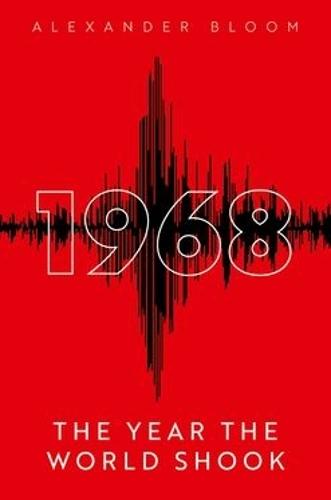
It has been called the year that changed everything, the postwar watershed in which the forces that shaped public and private life erupted, everywhere and all at once--New York, Paris, Prague, Mexico City. Beginning with the Tet Offensive in Vietnam in January and continuing through the inauguration of Richard Nixon as president the following January, 1968 witnessed the assassinations of Martin Luther King, Jr. and Robert F. Kennedy, the Democratic Convention in Chicago, and the irresistible rise of a rebellious spirit that questioned every form of authority. Each month brought a fresh wave of upheaval with shared undercurrents---deep frustrations, bold aspirations, and a growing conviction that change, whether peaceful and violent, was inevitable. Political unrest, civil rights struggles, anti-war protests, generational shifts: the causes were manifold and complex, yet their convergence was unmistakable. Alexander Bloom captures the explosive energy of a world in upheaval, illuminating how the events of 1968 were driven by youth movements, inspired by music and the subversive pull of countercultural ideals, all of which transcended borders. In Prague, young people tuned into Western radio, embracing the same sounds and messages reverberating through London and San Francisco. Styles of dress, personal expression, and radical ideals spread rapidly, fueled by an expanding media. The revolution was in fact being televised, making distant struggles immediate and personal, and turning local movements into global moments. Together, these forces made 1968 a year unlike any before or any since. For many, it felt as if the ground beneath them had shifted. Political and social transformation seemed not just possible but imminent, across the nation and around the world. Not all the promises or expectations of that year bore fruit and the backlash it generated remains with us. Still, it marked an irrevocable turning point in world history. In 1968, the world didn't just change---it shook to its core.
Full Product Details
Author: Professor of History Emeritus Alexander Bloom (Wheaton College)
Publisher: Oxford University Press
Imprint: Oxford University Press
ISBN: 9780197793350
ISBN 10: 0197793355
Pages: 456
Publication Date: 02 March 2026
Audience:
General/trade
,
General
Format: Hardback
Publisher's Status: Forthcoming
Availability: Not yet available

This item is yet to be released. You can pre-order this item and we will dispatch it to you upon its release.
Author Information
Alexander Bloom is Professor of History, Emeritus at Wheaton College. His books include Prodigal Sons: The New York Intellectuals and Their World, Takin' It to the Streets: A Sixties Reader, and Long Time Gone: Sixties America Then and Now. He was twice Fulbright Senior Lecturer in American Intellectual and Cultural History at the Universita di Roma Tre, Rome. Bloom is a frequently consulted source on the 1960s, Vietnam, antiwar and protest movements, and the Iraqi conflict. He has been a guest commentator on PBS and NPR, as well as being interviewed by the New York Times, The Wall Street Journal, the Christian Science Monitor, the Boston Globe, and numerous American newspapers, magazines, and radio stations.