Overview
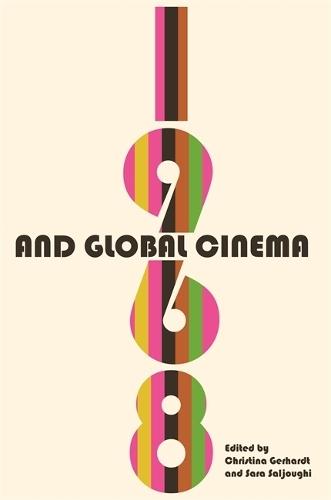
Examines the political cinema of 1968 in relation to global events. 1968 and Global Cinema addresses a notable gap in film studies. Although scholarship exists on the late 1950s and 1960s New Wave films research that puts cinemas on 1968 into dialogue with one another across national boundaries is surprisingly lacking. Only in recent years have histories of 1968 begun to consider the interplay among social movements globally. The essays in this volume, edited by Christina Gerhardt and Sara Saljoughi, cover a breadth of cinematic movements that were part of the era’s radical politics and independence movements. Focusing on history, aesthetics, and politics, each contribution illuminates conventional understandings of the relationship of cinema to the events of 1968, or """"the long Sixties."""" The volume is organized chronologically, highlighting the shifts and developments in ideology in different geographic contexts. The first section examines both the visuals of new cinemas as wellas new readings of the period’s politics in various geopolitical iterations. This half of the book begins with an argument that while the impact of Italian Neorealism and the French New Wave on subsequent global new waves is undeniable, the influence of cinemas of the so-called Global South is pivotal for the eras cinema as well. The second section considers the lasting impact of 1968 and related cinematic new waves into the 1970s. The essays in this section range from China's Cultural Revolution in cinema to militancy and industrial struggle in 1070s worker's films in Spain. In these ways, the volume provides fresh takes and allows for new discoveries of the cinemas of the long 1968. 1968 and Global Cinema aims to achieve balance between new readings of well-known films filmmakers and movements as well as new research that engages lesser-known bodies of films and film tests. The volume is ideal for graduate and undergraduate courses on the long sixties, political cinema, 1968, and new waves in art history, cultural studies and film and media studies. Contributors: Robert Stam, Lily Saint, Rocco Giansante, Peter Hames, Rita de Grandis, Morgan Adamson, David Desser, Graeme Stout, Mauro Resmini, Man-tat Terence Leung, Allyson Nadia Field, Sarah Hamblin, J. M. Tyree, Victor Fan, Laurence Coderre, Pablo La Parra-Perez, Paula Rabinowitz, Sara Saljoughi, Christina Gerhardt.
Full Product Details
Author: Christina Gerhardt ,
Sara Saljoughi ,
Robert Stam (New York University) ,
Lily Saint
Publisher: Wayne State University Press
Imprint: Wayne State University Press
Dimensions:
Width: 15.20cm
, Height: 2.20cm
, Length: 22.80cm
Weight: 0.598kg
ISBN: 9780814342930
ISBN 10: 0814342930
Pages: 384
Publication Date: 31 October 2018
Audience:
Professional and scholarly
,
Professional & Vocational
Format: Paperback
Publisher's Status: Active
Availability: Manufactured on demand

We will order this item for you from a manufactured on demand supplier.
Language: English
Reviews
This is a timely, informative, and stimulating set of essays, designed to deepen our understanding of 1968 as a watershed in cinematic aesthetics and global activist politics. An impressive collective accomplishment.-- (05/22/2018) This volume makes a welcome intervention into scholarship on political cinema, insisting on the centrality of anticolonial struggles and international solidarities to the category of world cinema. The editors have gathered an impressive range of essays which open out the histories and aesthetics of 1968 in genuinely exciting ways.-- (05/22/2018) This is an excellent and innovative study that expands the study of May 1968 beyond its familiar parameters into new and exciting fields, both temporal and geographic.--Paul Julian Smith author of Queer Mexico: Cinema and Television since 2000 (Wayne State University Press, 2017) (05/22/2018) Every essay is original and significant, and taken together they amount to a very important achievement.--James Morrison author of Auteur Theory and My Son John (05/22/2018)
"1968 and Global Cinema ... enables the reader ... to consider the multifaceted ways in which screen cultures engaged with the long 1968 across national and linguistic boundaries. By putting the global cinemas of 1968 into dialogue with one another, the book makes an important contribution to the de-centering of Europe from the politics of 1968, especially given that decolonization and anti-imperialism were experienced far more immediately in countries in Asia, Africa, and Latin America. --Catriona Corke ""German Studies Review"" (Referring to co-editor Christina Gerhardt's three recent publications, including 1968 and Global Cinema) an admirable achievement, and Gerhardt must be congratulated for her efforts in bringing this large body of scholarship to publication. It was obviously a labor of love, and Gerhardt deserves recognition as the intellectual leader of her field. --Denise J. Youngblood ""Historical Journal of Film, Radio and Television"" A welcome contribution [to the field of Film and Media Studies] that confirms the centrality of cinematic praxis to the social movements that shaped the 'Long Sixties.' --David Fresko ""The Sixties: A Journal of History, Politics, and Culture"" Published to coincide with the fiftieth anniversary of a watershed moment in twentieth-century political conflict, the impressive 1968 and Global Cinema seeks to broaden contemporary understanding of that moment beyond the French student uprisings, corresponding movements in the U.S., and the New Wave cinema explicitly invested in those struggles. --Ryan Sherwood ""Film & History"" Readers of this volume can choose what they want to get out of it: all contributions could be an entryway into the respective country's radical filmmaking cultures (and beyond); they could serve as a catalog of approaches to what radical forms of cinema meant in the respective context; they could serve as a starting point to explore the respective national cinematic tradition, as most contributions go beyond (both past and future of) the focus on 1968. --Friedemann Weidauer ""Monatshefte"" The book certainly provides cinema scholars with extensive and varied looks at previously neglected cultural and political movements, and it expands the era, helping readers to rethink concepts of the global and national as well as cinema's relationship to radical politics and the legacy of the long '68. --Anne Cunningham ""Studies in 20th & 21st Century Literature"" The collection features significant new contributions that prevent it from being another Eurocentric/Francophilic work with reiterations of the known. It concentrates on East Asia, Europe's peripheries, lost archives and other geopolitical spaces that remained largely ignored in the existing accounts. --Parichay Patra ""Transnational Screens"" Thrilling in intellectual rigor and scope, the books' accomplishment is an inestimable one for future studies of committed film and media, particularly those interested in Tricontinental theory, post-socialist Europe, and the worldwide South. -- ""NECSUS"""
1968 and Global Cinema ... enables the reader ... to consider the multifaceted ways in which screen cultures engaged with the long 1968 across national and linguistic boundaries. By putting the global cinemas of 1968 into dialogue with one another, the book makes an important contribution to the de-centering of Europe from the politics of 1968, especially given that decolonization and anti-imperialism were experienced far more immediately in countries in Asia, Africa, and Latin America. --Catriona Corke ""German Studies Review"" (Referring to co-editor Christina Gerhardt's three recent publications, including 1968 and Global Cinema) an admirable achievement, and Gerhardt must be congratulated for her efforts in bringing this large body of scholarship to publication. It was obviously a labor of love, and Gerhardt deserves recognition as the intellectual leader of her field. --Denise J. Youngblood ""Historical Journal of Film, Radio and Television"" A welcome contribution [to the field of Film and Media Studies] that confirms the centrality of cinematic praxis to the social movements that shaped the 'Long Sixties.' --David Fresko ""The Sixties: A Journal of History, Politics, and Culture"" Published to coincide with the fiftieth anniversary of a watershed moment in twentieth-century political conflict, the impressive 1968 and Global Cinema seeks to broaden contemporary understanding of that moment beyond the French student uprisings, corresponding movements in the U.S., and the New Wave cinema explicitly invested in those struggles. --Ryan Sherwood ""Film & History"" Readers of this volume can choose what they want to get out of it: all contributions could be an entryway into the respective country's radical filmmaking cultures (and beyond); they could serve as a catalog of approaches to what radical forms of cinema meant in the respective context; they could serve as a starting point to explore the respective national cinematic tradition, as most contributions go beyond (both past and future of) the focus on 1968. --Friedemann Weidauer ""Monatshefte"" The book certainly provides cinema scholars with extensive and varied looks at previously neglected cultural and political movements, and it expands the era, helping readers to rethink concepts of the global and national as well as cinema's relationship to radical politics and the legacy of the long '68. --Anne Cunningham ""Studies in 20th & 21st Century Literature"" The collection features significant new contributions that prevent it from being another Eurocentric/Francophilic work with reiterations of the known. It concentrates on East Asia, Europe's peripheries, lost archives and other geopolitical spaces that remained largely ignored in the existing accounts. --Parichay Patra ""Transnational Screens"" Thrilling in intellectual rigor and scope, the books' accomplishment is an inestimable one for future studies of committed film and media, particularly those interested in Tricontinental theory, post-socialist Europe, and the worldwide South. -- ""NECSUS""
This is a timely, informative, and stimulating set of essays, designed to deepen our understanding of 1968 as a watershed in cinematic aesthetics and global activist politics. An impressive collective accomplishment.-- (05/22/2018) This volume makes a welcome intervention into scholarship on political cinema, insisting on the centrality of anticolonial struggles and international solidarities to the category of world cinema. The editors have gathered an impressive range of essays which open out the histories and aesthetics of 1968 in genuinely exciting ways.-- (05/22/2018) Every essay is original and significant, and taken together they amount to a very important achievement.--James Morrison author of Auteur Theory and My Son John (05/22/2018) This is an excellent and innovative study that expands the study of May 1968 beyond its familiar parameters into new and exciting fields, both temporal and geographic.--Paul Julian Smith author of Queer Mexico: Cinema and Television since 2000 (Wayne State University Press, 2017) (05/22/2018)
Author Information
Christina Gerhardt is associate professor of film and German at the University of Hawai'i. Her writing has been published in Cineaste, Film Criticism, Film Quarterly, German Studies Review, Mosaic, New German Critique, Quarterly Review of Film and Video, and The Sixties. Sara Saljoughi is assistant professor of English and cinema studies at the University of Toronto. Her essays have appeared in Camera Obscura, Feminist Media Histories, Iranian Studies, Film International, and Film Criticism.