Overview
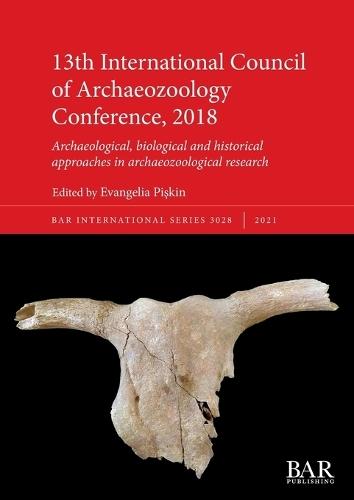
This volume collects 10 papers presented at the 13th ICAZ International conference comprising of research from wide-ranging geographical and chronological contexts. A variety of topics are discussed including Neanderthal behavioural patterns, animal economy and exploitation, and biodiversity and extinction or expansion of a range of species. There are also chapters presenting osteometric information on particular species (dogs and otariids). The papers presented employ an array of methods, integrating textual, historical and iconographic data to tackle complex archaeological questions, thus showcasing the capacious nature of zooarchaeological studies. The volume is illustrated with photographs that demonstrate human modifications on bones and pathologies, as well as examples of species separation. The volume also contains a good body of osteometric data, making it a useful resource for researchers and students working on these topics.
Full Product Details
Author: Evangelia Piskin
Publisher: BAR Publishing
Imprint: BAR Publishing
Weight: 0.686kg
ISBN: 9781407357843
ISBN 10: 1407357840
Pages: 172
Publication Date: 30 May 2021
Audience:
Professional and scholarly
,
Professional & Vocational
Format: Paperback
Publisher's Status: Active
Availability: Available To Order 
We have confirmation that this item is in stock with the supplier. It will be ordered in for you and dispatched immediately.
Table of Contents
Preface Introduction Evangelia Piskin 1. Bone Refits at Abric Romaní (Barcelona, Spain) and Riparo Tagliente (Verona, Italy) : Testing Neanderthal Use of Space and Post-depositional Disturbances Marta Modolo, Jordi Rosell, Ruth Blasco, Maria Chiara Turrini, and Ursula Thun Hohenstein 1. Introduction 2. Abric Romaní, level I and sublevel Ja 3. Riparo Tagliente, level 37 4. Materials and methods 5. Results 5.1. Abric Romaní, level I: taphonomical and zooarchaeological data 5.2. Abric Romaní, level I: refits 5.3. Abric Romaní, sublevel Ja: taphonomical and zooarchaeological data 5.4. Abric Romaní, sublevel Ja: refits 5.5. Riparo Tagliente, level 37: taphonomical and zooarchaeological data 5.6. Riparo Tagliente, level 37: refits 6. Discussion 7. Conclusion 2. Animal Remains from an Early Bronze Age Site - Tel Erani (Israel) Piotr Wojtal, Krzysztof Wertz, Teresa Tomek, Lembi Lõugas, Marcin Czarnowicz and Agnieszka Ochal-Czarnowicz 1. Introduction 2. Stratigraphy of the site 3. Material and Methods 4. Results 4.1. Crabs (Brachyura) 4.2. Mollusks 4.3. Fishes 4.4. Birds 4.5. Small mammals 4.6. Large mammals 4.7. Signs of human activity - cut marks and burnt bones 4.8. Signs of human activity - bone tools and modified bones 4.9. Dog activity - gnawing and digested bones 4.10. Root etching 4.11. Trampling marks 4.12. Calcite precipitate 4.13. Trench P/Q 5. Discussion 5.1. Mollusks 5.2. Birds 5.3. Small mammals 5.4. Large mammals 6. Conclusions 3. Animal Husbandry of Funnel Beaker Culture: Case Study of Mozgawa Site (Poland, Lesser Poland) Jaroslaw Wilczynski, Sylwia Pospula-Wedzicha, Krzysztof Wertz, Lembi Lõugas, Magdalena Moskal-del Hoyo, Marta Korczynska and Marek Nowak 1. Introduction 2. Material and methods 3. Results 3.1. Results - animal bone assemblage 3.2. Results - human activity 3.3. Results - animal activity 4. Discussion 5. Conclusion 4. An Overview of Zooarchaeological Research in Brazil: The role of Multiproxy Analyses Rosa Cristina Corrêa Luz de Souza, Albérico Nogueira de Queiroz and Olivia Alexandre de Carvalho 1. Introduction 2. At the Beginning: The importance of Zoological Collections for Comparison 3. Brazilian Multiproxy Analyses Example: Shellmounds, Nature of the Samples, Case Studies and Results 3.1. Fishes 3.2. Molluscs 3.3. Crustaceans: Crabs 4. Comments and Final Considerations 5. Exploring the Zooarchaeological Evidence of Otariids Exploitation by Terrestrial Hunter-Gatherers Along the Western Coast of San Matías Gulf, Argentina Florencia Borella and G. Lorena L'Heureux 1. Introduction 1.1. Archaeological background in the area 1.2. Characteristics of pinnipds from the area 2. Material and methods 3. Results 4. Discussion and conclusions 6. Dogs and Cats at Medieval Komana, Turkey Evangelia Piskin and Özgen Sütçü 1. Introduction 2. The archaeological site of Komana 3. Methods 4. Results 4.1. Sector HTP01: skeletal finds, ageing, modifications 4.2. Sector HTP02: skeletal finds, ageing, modifications 4.3. Sector HTP03: skeletal finds, ageing, modifications 5. Pathology 6. Osteometry 7. Discussion 8. Conclusions 7. A Multidisciplinary Approach to Zooarchaeology: Human-Animal Relationships at Tarquinia (Italy) Ornella Prato 1. Zooarchaeology in a complex society 2. Etruscans and Tarquinia 3. Zooarchaeology and iconography at Tarquinia 4. Deer and the Etruscans 5. Conclusion 8. The Master and His Best Friend. The Role of the Dog in Human Life and Beyond in the South-Eastern Alpine Region During Roman Times Anja Ragolic and Borut Toskan 1. Introduction 2. South-eastern Alpine region in the Roman Age 3. The dog in prehistoric south-eastern Alpine region 4. Case studies 4.1. Dog finds in ditches and waste pits: case-study NUK II (Emona) 4.2. Dog finds in human graves: case-study Krizisce 4.3. Dog finds in wells: case-study Kozolec (Emona) 4.4. Symbolic role of dog in Late Antiquity: case-study Pristava 5. Conclusion 9.Pastoral Economy in the Late Bronze Age City of Sapinuva, Turkey A Comparison of Zooarchaeological and Textual Evidence Evangelia Piskin and Gamze Durdu 1. Introduction 2. The Hittite empire and Sapinuva 2.1. The Hittites 2.2. Sapinuva 3. The structure of Hittite animal husbandry from the texts 3.1. Sheep and goat abundance and age composition 3.2. Animal products 3.3. Who owns the flocks? 3.4. Herdsmen 3.5. Pastures - nomadism - transhumance 4. Zooarchaeological materials, hypotheses and methods. 5. Data and species proportions 6. Mortality profiles 6.1. Payne's method, complete mandibles 6.2. Payne's method, all data 6.3. Grant and Greenfield and Arnold's system, all data 7. Discussion 8. Conclusions 10.The Importance of Combining Literary and Archaeozoological Data to Understand the Role of Animals in Ancient India (1200 BCE to 300 CE) Gauri Bedekar 1. Introduction 2. Literary sources of animals in ancient India 2.1. O
Reviews
'This is a valuable contribution that brings together a group of leading scholars from around the world.' Dr Krish Seetah, Stanford University
'This is a valuable contribution that brings together a group of leading scholars from around the world.' Dr Krish Seetah, Stanford University
Author Information
Evangelia Piskin holds a PhD from the University of Leicester, UK. She is currently Associate Professor at Middle East Technical University, Turkey, where she also directs the Environmental Archaeology Research Unit. Her latest research on zooarchaeology concentrates on integration of data from various sources, transhumance and centralised animal economies. List of contributors: Gauri Bedekar, Ruth Blasco, Florencia Borella, Olivia Alexandre de Carvalho, Marcin Czarnowicz, Gamze Durdu, Marta Korczynska, G. Lorena L'Heureux, Lembi Lõugas, Marta Modolo, Magdalena Moskal-del Hoyo, Marek Nowak, Agnieszska Ochal-Czarnowicz, Evangelia Piskin, Sylwia Pospula-Wedzicha, Ornella Prato, Albérico Nogueira de Queiroz, Anja Ragolic, Jordi Rosell, Rosa Cristina Corrêa Luz de Souza, Özgen Sütçü, Ursula Thun Hohenstein, Teresa Tomek, Borut Toskan, Maria Chiara Turrini, Krzysztof Wertz, Jaroslaw Wilczynski, Piotr Wojtal.
Tab Content 6
Author Website:
Countries Available
All regions
|