Overview
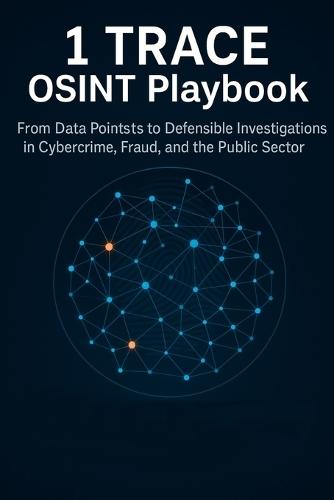
In the last decade, ""OSINT"" has gone from a niche acronym to a buzzword. Every week, new tools promise real-time miracles: track any phone, deanonymize any wallet, expose any network. Screenshots circulate on social media; dashboards look impressive; graphs explode with nodes and edges. And yet, when you are the person actually responsible for an investigation, something far more basic matters: Can I explain what I did? Can someone else reproduce it? Would I be comfortable defending my work in front of a judge, a regulator, or a board? This book was written for the people who have to answer ""yes"" to those questions. It is not a catalog of tricks. It is a playbook for using a platform like 1 TRACE to run investigations that are technically solid, legally defensible, and ethically responsible-whether you sit in a SOC, a fraud team, a law-enforcement unit, or a public administration. You will not find magic ""OSINT hacks"" here. You will find: Clear workflows for common cases: business email compromise (BEC), romance scams, local-government phishing, leaked databases, crypto tracing. Practical guidance on combining open-source signals with internal logs, CERT/CIRT data, and existing IR processes. A sober discussion of governance, privacy, proportionality, and accountability, especially in a European and public-sector context. Templates for reports, timelines, and evidence packages that can be reused in real organizations, not only in training labs. The platform used as a narrative thread is 1 TRACE: a multi-source OSINT and investigation environment that connects phones, domains, IPs, wallets, CDR/IPDR, dark-web monitoring and more into a single investigative graph. But the deeper goal of the book is not to market a tool. It is to help you think and act like an OSINT professional, regardless of which exact products your team uses. Throughout the chapters, you will notice a few recurring themes: Method over magic. A ""result"" without a documented path is just an opinion with good graphics. People behind data. Every phone number, email address, or wallet belongs to someone with rights and expectations-not just to an object in a graph. Proportionality and minimization. Just because you can collect and correlate something does not mean you should. Storytelling with evidence. Good investigations end not with a graph, but with a clear, honest story: what happened, what we know, what we don't know, and what we recommend. If you are working in a public administration, you will also find a specific sensitivity: examples and playbooks about fake portals targeting municipalities, fraud against citizens using official logos, and the delicate balance between protecting services and respecting citizens' privacy. That perspective comes from lived practice in the European public sector, where GDPR, NIS2 and national rules are not abstract concepts but everyday constraints.
Full Product Details
Author: Maxwell Drake
Publisher: Independently Published
Imprint: Independently Published
Dimensions:
Width: 15.20cm
, Height: 1.10cm
, Length: 22.90cm
Weight: 0.290kg
ISBN: 9798277565612
Pages: 214
Publication Date: 05 December 2025
Audience:
General/trade
,
General
Format: Paperback
Publisher's Status: Active
Availability: Available To Order

We have confirmation that this item is in stock with the supplier. It will be ordered in for you and dispatched immediately.