|
|
|||
|
||||
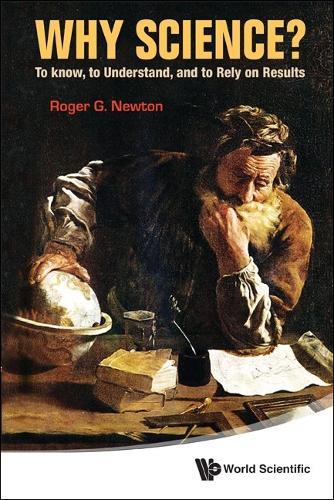
OverviewThis book aims to describe, for readers uneducated in science, the development of humanity's desire to know and understand the world around us through the various stages of its development to the present, when science is almost universally recognized - at least in the Western world - as the most reliable way of knowing. The book describes the history of the large-scale exploration of the surface of the earth by sea, beginning with the Vikings and the Chinese, and of the unknown interiors of the American and African continents by foot and horseback. After the invention of the telescope, visual exploration of the surfaces of the Moon and Mars were made possible, and finally a visit to the Moon. The book then turns to our legacy from the ancient Greeks of wanting to understand rather than just know, and why the scientific way of understanding is valued. For concreteness, it relates the lives and accomplishments of six great scientists, four from the nineteenth century and two from the twentieth. Finally, the book explains how chemistry came to be seen as the most basic of the sciences, and then how physics became the most fundamental. Full Product DetailsAuthor: Roger G. NewtonPublisher: World Scientific Publishing Co Pte Ltd Imprint: World Scientific Publishing Co Pte Ltd Dimensions: Width: 15.20cm , Height: 1.00cm , Length: 22.40cm Weight: 0.204kg ISBN: 9789814397339ISBN 10: 9814397334 Pages: 100 Publication Date: 23 July 2012 Audience: General/trade , General Format: Paperback Publisher's Status: Active Availability: In stock We have confirmation that this item is in stock with the supplier. It will be ordered in for you and dispatched immediately. Table of ContentsWe Want to Know: Looking at the Heavens; Exploratory Voyages; We Want to Understand: Charles Darwin; Gregor Mendel, Louis Pasteur; Michael Faraday; Max Planck; Enrico Fermi; Science: Chemistry as the Fundamental Science; How Physics Became Most Fundamental.ReviewsAuthor InformationTab Content 6Author Website:Countries AvailableAll regions |
||||