Overview
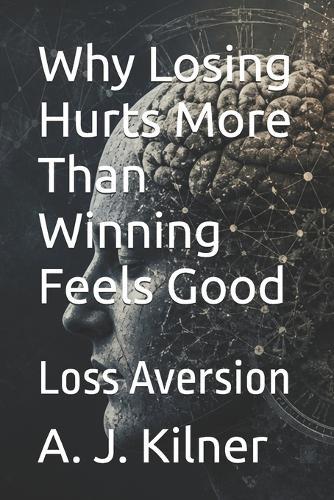
Loss Aversion: Why Losing Hurts More Than Winning Feels Good The hidden force that shapes every decision you make. And how to finally take back control. Why do you hold losing investments too long and sell winners too early? Why do you stay in a job that no longer serves you? Why do you remain in relationships that have run their course? Why do you reject promotions, avoid networking, and hesitate to make changes that would improve your life? The answer is loss aversion. This powerful cognitive bias causes losses to feel approximately twice as intense as equivalent gains. It is not a flaw in your thinking. It is a structural feature of the human brain, shaped by millions of years of evolution. In the modern world, however, this ancient survival mechanism works against you. It keeps you stuck, traps you in the status quo, and prevents you from pursuing opportunities that would dramatically improve your life. This volume, part of The Cognitive Bias Codex series by E. J. Kilner, provides a complete examination of loss aversion. You will discover the foundational experiments by Nobel Prize winning psychologists Kahneman and Tversky. You will understand the value function and why the pain of loss always outweighs the pleasure of gain. You will learn how the endowment effect makes you overvalue what you already own. You will see how the sunk cost fallacy drives escalating commitment to failing projects, relationships, and strategies. The book then applies loss aversion to specific domains where its effects are most damaging. Financial decisions and the disposition effect that costs investors billions. Career decisions and the opportunity avoidance that keeps you below your potential. Relationships and the status quo trap that prevents change. Negotiation and the fixed pie bias that destroys value. Health decisions and the inaction bias that leads you to accept larger risks rather than take action. You will also learn the neural basis of loss aversion, including the role of the amygdala and insula in threat detection. You will understand why social losses of status, reputation, and belonging trigger an even stronger response than financial losses. And you will discover why anticipating future regret amplifies loss aversion, keeping you stuck in inaction. Unlike books that only describe cognitive biases, this volume provides structured, actionable techniques for mitigation. You will learn how to recalibrate your reference point using zero based assessment, counterfactual thinking, and the hypothetical fresh start. You will master precommitment strategies that bind your future decisions before loss aversion can distort them. You will learn to compute expected value and distinguish emotional weight from mathematical reality. You will discover the Stoic framework for accepting losses strategically, freeing resources for better deployment. The book also includes structural debiasing techniques for organizations, including separate evaluation of new projects, blind reviews of continuing investments, loss budgeting, and automatic termination triggers. A personal audit tool helps you identify the domains where loss aversion has the greatest impact on your life. This book is for investors who want to overcome the disposition effect. For professionals who want to stop rejecting promotions and start growing. For anyone stuck in an unsatisfactory relationship or living situation. For negotiators who want to create value rather than fight over fixed pies. For patients who want to make health decisions based on statistics rather than fear. For leaders who want to build organizations that learn from failure rather than escalating commitment to losing courses of action. Loss aversion cannot be eliminated. But it can be managed. This book shows you how.
Full Product Details
Author: Raymond Hurn ,
A J Kilner
Publisher: Independently Published
Imprint: Independently Published
Volume: 5
Dimensions:
Width: 15.20cm
, Height: 1.10cm
, Length: 22.90cm
Weight: 0.281kg
ISBN: 9798196899232
Pages: 206
Publication Date: 14 May 2026
Audience:
General/trade
,
General
Format: Paperback
Publisher's Status: Active
Availability: Available To Order

We have confirmation that this item is in stock with the supplier. It will be ordered in for you and dispatched immediately.