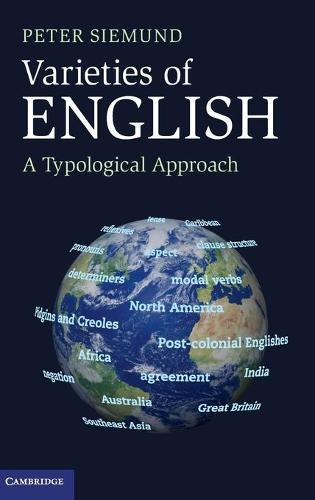
Full Product Details
Author: Peter Siemund (Universität Hamburg)
Publisher: Cambridge University Press
Imprint: Cambridge University Press
Dimensions:
Width: 15.50cm
, Height: 2.30cm
, Length: 23.50cm
Weight: 0.640kg
ISBN: 9780521764964
ISBN 10: 0521764963
Pages: 325
Publication Date: 09 May 2013
Audience:
College/higher education
,
Tertiary & Higher Education
Format: Hardback
Publisher's Status: Active
Availability: Manufactured on demand

We will order this item for you from a manufactured on demand supplier.
Reviews
'This book offers a unique exploration of morphosyntactic variation across varieties of English from a functional typological perspective. It is a meticulously designed textbook, and a treasure trove of new insights into vernacular Englishes worldwide.' Donald Winford, Ohio State University 'Professor Siemund's textbook is an innovative and easily accessible introduction to World Englishes, with up-to-date topics and lucid exposition. It is an excellent source of information on the grammatical consequences of the spread of English, and is of immense interest not only to students of World Englishes but also to students of general dialectological and typological issues.' Zhiming Bao, National University of Singapore 'Here at last is the textbook much missed both by students and university teachers in classes on structural variation in World Englishes, dialects of English, and English-based Pidgins and Creoles. Developed and refined in numerous linguistics classes, it is thought-provoking and yet easily digestible for advanced undergraduate and graduate students (and likewise for a more senior readership), an effect enhanced not least by well-chosen sets of exercises following each of the chapters.' Bernd Kortmann, University of Freiburg '... based on a wide range of data from varieties of English all over the world, Peter Siemund's book on Varieties of English: A Typological Approach manages to build a much needed bridge between linguistic typology and variationist study of language. It provides the reader with a balanced discussion of morphosyntactic features common to, or different between, varieties of English and seeks explanations for them in terms of linguistic universals and/or sociohistorical background factors.' Markku Filppula, University of Eastern Finland, Joensuu
Advance praise: 'This book offers a unique exploration of morphosyntactic variation across varieties of English from a functional typological perspective. It is a meticulously designed textbook, and a treasure trove of new insights into vernacular Englishes worldwide.' Donald Winford, Ohio State University Advance praise: 'Professor Siemund's textbook is an innovative and easily accessible introduction to World Englishes, with up-to-date topics and lucid exposition. It is an excellent source of information on the grammatical consequences of the spread of English, and is of immense interest not only to students of World Englishes but also to students of general dialectological and typological issues.' Zhiming Bao, National University of Singapore Advance praise: 'Here at last is the textbook much missed both by students and university teachers in classes on structural variation in World Englishes, dialects of English, and English-based Pidgins and Creoles. Developed and refined in numerous linguistics classes, it is thought-provoking and yet easily digestible for advanced undergraduate and graduate students (and likewise for a more senior readership), an effect enhanced not least by well-chosen sets of exercises following each of the chapters.' Bernd Kortmann, University of Freiburg Advance praise: '... based on a wide range of data from varieties of English all over the world, Peter Siemund's book on Varieties of English: A Typological Approach manages to build a much needed bridge between linguistic typology and variationist study of language. It provides the reader with a balanced discussion of morphosyntactic features common to, or different between, varieties of English and seeks explanations for them in terms of linguistic universals and/or sociohistorical background factors.' Markku Filppula, University of Eastern Finland, Joensuu
Author Information
Peter Siemund is Professor and Chair of English Linguistics at the University of Hamburg.