Overview
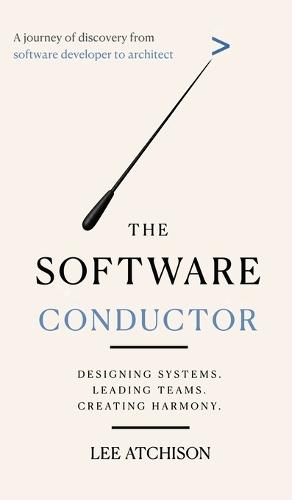
You shipped the release. Three hours later, the alerts started firing. You've been doing this for years. You're the one the team turns to when production breaks. You write elegant code. You unblock everyone else. And lately you've started wondering whether you'll be doing this for another twenty years or whether AI is going to make most of what you do irrelevant a lot sooner than that. You're not wrong to wonder. In the past two years, programmer employment in the U.S. fell more than 27%. Entry-level tech hiring at the largest firms is down 25% year over year. AI coding assistants are absorbing the parts of the job that used to be your runway. And yet the role classified as ""software developer"", the more design-oriented, architectural work, is projected to grow 18% over the next decade. The industry isn't shrinking. It's being redrawn. The line being drawn separates execution from origination. The routine, repeatable parts of the work that AI handles well, and the synthesis, judgment, and original thinking that AI cannot do. Architects work above that line. Developers who don't make the move work below it. The Software Conductor is the book you read to make the move. A different kind of architecture book This isn't a pattern catalog. It's the story of Aaron Blake, a senior developer burning out doing exactly what AI is starting to do well, and Anton Weiss, a symphony conductor who teaches him the difference between playing an instrument and conducting an orchestra. A violinist makes sound. A conductor makes music. A developer writes code. An architect creates the conditions for great software to exist. The metaphor isn't a clever framing device. It's a working mental model. A conductor doesn't make a single sound. A great architect doesn't write the system. They make it possible for the system to exist. They listen for what's missing as much as for what's loudest. They lead without controlling. They shape outcomes without owning every detail. That's the role AI cannot do. And it's the role most developers don't yet know how to step into. What you'll come away with Each part of the book pairs a story chapter (Aaron's journey, told with emotional honesty) with a practical interlude that turns the story's lesson into a working framework you can apply Monday morning. By the end, you'll have: A clear map of what architectural thinking actually is, and how it differs from senior development Frameworks for shaping systems and decisions without controlling every detail A working model for leading through influence rather than through authority A grounded approach to mentoring and scaling your impact instead of being the bottleneck A clear-eyed view of what the AI shift means for your career, and what to do about it now This is the book for the senior developer who suspects they're ready for more. For the new architect who feels lost without the keyboard. For the engineering leader supporting people through this transition. And for anyone who has looked at the headlines about AI and quietly asked, what does this mean for me? The orchestra is waiting. Pick up the baton.
Full Product Details
Author: Lee Atchison
Publisher: Atchison Academy
Imprint: Atchison Academy
Dimensions:
Width: 12.70cm
, Height: 1.30cm
, Length: 20.30cm
Weight: 0.277kg
ISBN: 9798996019625
Pages: 148
Publication Date: 25 May 2026
Audience:
General/trade
,
General
Format: Hardback
Publisher's Status: Active
Availability: Not yet available

This item is yet to be released. You can pre-order this item and we will dispatch it to you upon its release.
Author Information
Lee Atchison is a software architect, author, and recognized voice on cloud computing and engineering leadership.He is the author of Architecting for Scale (O'Reilly Media, now in its second edition) and Overcoming IT Complexity (O'Reilly), and the creator of multiple courses for O'Reilly Media and LinkedIn Learning. He writes the Software Architecture Insights newsletter and co-hosts on Software Engineering Daily.Lee has spent more than three decades in the software industry. That includes seven years at Amazon and AWS, where he worked on Amazon Retail systems and built AWS Elastic Beanstalk, and eight years at New Relic, where he led architecture for New Relic's SaaS observability platform. He most recently served as CTO at AI company, Product Genius. Today he writes and consults through his own practice, Atchison Technology.His work has taken him to engineering teams at Nike, Disney, Starbucks, MLB, Deutsche Telekom, and Bank of America, and to conference stages including AWS re: Invent. The thread connecting all of it is a question he keeps hearing from developers, architects, and engineering leaders alike: as AI changes what software work means, how do we stay relevant?The Software Conductor is his answer.Lee lives in Seattle, Washington.