Overview
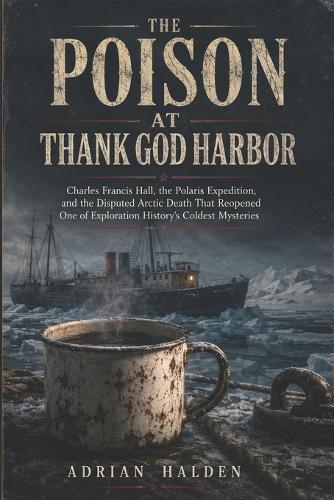
A polar expedition. A suspicious death. A body that spoke almost a century too late. In 1871, Charles Francis Hall returned to the American polar steamer Polaris after a grueling Arctic sledge journey near Thank God Harbor in northwest Greenland. He had spent years chasing the North, learning from Inuit communities, and building himself into one of the most determined figures in Arctic exploration history. Within hours of his return, he fell violently ill. During the ordeal that followed, Hall accused members of his own expedition-especially physician and scientist Emil Bessels-of poisoning him. The official answer came later: natural disease, no criminal blame, no prosecution. But the case did not stay closed. The Poison at Thank God Harbor is a historical true crime investigation into the disputed death of Charles Francis Hall, the fractured Polaris expedition, and the arsenic poisoning evidence that reshaped how the case must be understood. This is not a simple murder accusation dressed up as certainty. It is a careful inquiry into what the record can prove, what it cannot prove, and why the difference still matters. The story unfolds inside one of the most unforgiving settings imaginable: the nineteenth-century Arctic. The ship was isolated. The witnesses were divided. Authority was contested. Hall had enemies and rivals aboard. The expedition doctor controlled the medical response. The coffee cup, treatment materials, and death scene were never preserved with anything like modern evidentiary care. By the time formal questions were asked, the most important physical proof had already slipped away. Then, in 1968, Hall's preserved remains were exhumed. Later testing found substantial arsenic exposure near the end of his life. That forensic history did not identify a killer, a dose, a delivery method, or a courtroom answer. But it did weaken the old explanation and turn an Arctic exploration mystery into one of the coldest unresolved deaths in American expedition history. Adrian Halden examines the case through chronology, setting, victimology, witness testimony, suspect theory, forensic evidence, institutional failure, and historical restraint. The book follows Hall's transformation from self-made explorer to polar commander, the tensions aboard Polaris, the role of Inuit expertise, the Navy inquiry, the exhumation, and the enduring question at the center of the case: what does truth look like when the evidence arrives too late for justice? This is a story of ambition, ice, authority, poison, and doubt. This investigative nonfiction book is for readers who want true crime handled with gravity, historical discipline, and respect for uncertainty. It treats Hall's death not as entertainment, but as a test of evidence: arsenic without a hand, accusation without conviction, and official closure without lasting confidence. The body spoke too late, but it did speak. Enter the frozen record of the Polaris expedition and examine the death that refused to
Full Product Details
Author: Adrian Halden
Publisher: Independently Published
Imprint: Independently Published
Dimensions:
Width: 15.20cm
, Height: 1.50cm
, Length: 22.90cm
Weight: 0.386kg
ISBN: 9798198411470
Pages: 288
Publication Date: 24 May 2026
Audience:
General/trade
,
General
Format: Paperback
Publisher's Status: Active
Availability: Available To Order

We have confirmation that this item is in stock with the supplier. It will be ordered in for you and dispatched immediately.