Overview
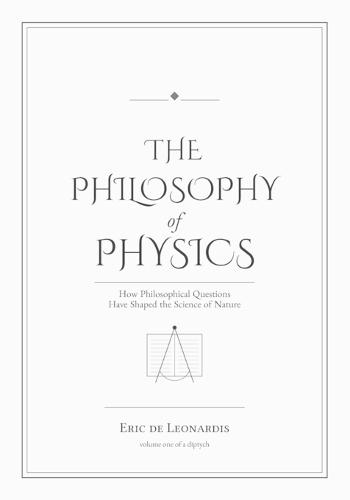
Every formula was once an argument.Physics looks as if it came from nowhere. Equations, detectors, silicon chips, double-blind data analysis: the discipline appears to walk into the world fully armed, like a technological Athena who needed no philosopher for a father. And yet every time a physicist writes an equation, invokes a symmetry, calls a quantity ""real,"" he or she is walking inside a cathedral. The cathedral was built by philosophers. The Philosophy of Physics traces, theme by theme, the silent assumptions on which the science of nature stands. Each of its nine chapters takes one great question --- What is real? Why does mathematics work? What is a cause? What is space, what is time? What is method? Who is the observer? Can we reduce the many to the one? Why does symmetry feel beautiful? Where does our knowledge end? --- and follows it from Plato to the latest debates in the foundations of quantum theory. The author writes as a Catholic intellectual who insists on staying objective: equidistant between scientific reason and the perspective of faith, never claiming that one is superior to the other. Believers and sceptics will both find themselves taken seriously. Three voices recur as quiet companions across the chapters: Fulton J. Sheen for the patient observation that empiricism is itself a metaphysical thesis; Thomas Aquinas for the analogy of being and the structure of secondary causes; and G. K. Chesterton for the paradox that clarifies. The didactic warmth owes a debt to Giovannino Guareschi at the level of style --- concrete images, plain speech --- not of setting. This is the first of two twin volumes. Its companion, The Physics of Philosophy, walks the same road in the opposite direction --- from the laboratory back to the ideas it has unsettled or confirmed. The two books echo one another; they can be read in any order. What you will find inside A thematic, not biographical, survey of the philosophical commitments hidden in modern physics. Plato, Aristotle, Aquinas, Galileo, Descartes, Newton, Leibniz, Hume, Kant, Mach, Poincaré, Bohr, Heisenberg, Popper, Kuhn, Feyerabend, Sheen, Chesterton, Ortega y Gasset, Gómez Dávila --- each called to the witness stand when the argument needs them. Short, well-built chapters with timelines, concept maps, and ""key points"" boxes; full bibliography; name index and subject index. An honest equidistance: the book never claims that physics displaces theology, nor that theology displaces physics. For readers who suspect that the most interesting question in physics is the one the textbook does not ask. For students who want a serious philosophical companion to their physics curriculum without losing the literary pleasure of reading. For believers and sceptics alike who want a writer they can trust to be fair to both sides.
Full Product Details
Author: Eric de Leonardis
Publisher: Independently Published
Imprint: Independently Published
Dimensions:
Width: 17.80cm
, Height: 1.10cm
, Length: 25.40cm
Weight: 0.358kg
ISBN: 9798196897924
Pages: 202
Publication Date: 14 May 2026
Audience:
General/trade
,
General
Format: Paperback
Publisher's Status: Active
Availability: Available To Order

We have confirmation that this item is in stock with the supplier. It will be ordered in for you and dispatched immediately.