Full Product Details
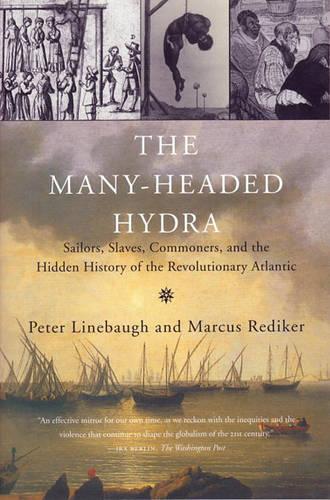
Author: Peter Linebaugh ,
Marcus Buford Rediker
Publisher: Beacon Press
Imprint: Beacon Press
Dimensions:
Width: 14.90cm
, Height: 3.20cm
, Length: 23.30cm
Weight: 0.662kg
ISBN: 9780807050071
ISBN 10: 0807050075
Pages: 352
Publication Date: 16 September 2001
Audience:
General/trade
,
General
Format: Paperback
Publisher's Status: Out of Stock Indefinitely
Availability: In Print

Limited stock is available. It will be ordered for you and shipped pending supplier's limited stock.
Reviews
For most readers the tale told here will be completely new. For those already well acquainted with the seventeenth and eighteenth centuries, the image of that age which they have been so carefully taught and cultivated will be profoundly challenged. --David Montgomery, author of Citizen Worker <br> A landmark in the development of an Atlantic perspective on early American history. Ranging from Europe to Africa to the Caribbean and North America, it makes us think in new ways about the role of working people in the making of the modern world. --Eric Foner, author of The Story of American Freedom <br> What would the world look like had the levelers, the diggers, the ranters, the slaves, the castaways, the Maroons, the Gypsies, the Indians, the Amazons, the Anabaptists, the pirates . . . won? Peter Linebaugh and Marcus Rediker show us what could have been by exhuming the revolutionary dreams and rebellious actions of the first modern proletariat, whose stories until now were lost at s
For most readers the tale told here will be completely new. For those already well acquainted with the seventeenth and eighteenth centuries, the image of that age which they have been so carefully taught and cultivated will be profoundly challenged. --David Montgomery, author of Citizen Worker A landmark in the development of an Atlantic perspective on early American history. Ranging from Europe to Africa to the Caribbean and North America, it makes us think in new ways about the role of working people in the making of the modern world. --Eric Foner, author of The Story of American Freedom What would the world look like had the levelers, the diggers, the ranters, the slaves, the castaways, the Maroons, the Gypsies, the Indians, the Amazons, the Anabaptists, the pirates . . . won? Peter Linebaugh and Marcus Rediker show us what could have been by exhuming the revolutionary dreams and rebellious actions of the first modern proletariat, whose stories until now were lost at sea. They have recovered a sunken treasure chest of history and historical possibility and spun these lost gems into a swashbuckling narrative full of labor, love, imagination, and startling beauty. --Robin D. G. Kelley, author of Yo' Mama's Disfunktional! The Many-Headed Hydra is about connections others have denied, ignored, or underemployed. In the sixteenth and seventeenth centuries, Europe, Africa, and the Americas came together to create a new economy and a new class of working people. Peter Linebaugh and Marcus Rediker tell their story with deep sympathy and profound insight. . . . A work of restoration and celebration of a world too long hidden from view. --Ira Berlin, author of Many Thousands Gone: The First Two Centuries of Slavery in North America More than just a vivid illustration of the gains involved in thinking beyond the boundaries between nation-states. Here, in incendiary form, are essential elements for a people's history of our dynamic, e
"For most readers the tale told here will be completely new. For those already well acquainted with the seventeenth and eighteenth centuries, the image of that age which they have been so carefully taught and cultivated will be profoundly challenged. --David Montgomery, author of ""Citizen Worker"" ""A landmark in the development of an Atlantic perspective on early American history. Ranging from Europe to Africa to the Caribbean and North America, it makes us think in new ways about the role of working people in the making of the modern world.""--Eric Foner, author of ""The Story of American Freedom"" ""What would the world look like had the levelers, the diggers, the ranters, the slaves, the castaways, the Maroons, the Gypsies, the Indians, the Amazons, the Anabaptists, the pirates . . . won? Peter Linebaugh and Marcus Rediker show us what could have been by exhuming the revolutionary dreams and rebellious actions of the first modern proletariat, whose stories until now were lost at sea. They have recovered a sunken treasure chest of history and historical possibility and spun these lost gems into a swashbuckling narrative full of labor, love, imagination, and startling beauty."" --Robin D. G. Kelley, author of ""Yo' Mama's Disfunktional!"" """"The Many-Headed Hydra"" is about connections others have denied, ignored, or underemployed. In the sixteenth and seventeenth centuries, Europe, Africa, and the Americas came together to create a new economy and a new class of working people. Peter Linebaugh and Marcus Rediker tell their story with deep sympathy and profound insight. . . . A work of restoration and celebration of a world too long hidden from view.""--Ira Berlin, author of ""Many Thousands Gone: The First Two Centuries of Slavery in North America"" ""More than just a vivid illustration of the gains involved in thinking beyond the boundaries between nation-states. Here, in incendiary form, are essential elements for a people's history of our dynamic, n"
For most readers the tale told here will be completely new. For those already well acquainted with the seventeenth and eighteenth centuries, the image of that age which they have been so carefully taught and cultivated will be profoundly challenged. --David Montgomery, author of Citizen Worker <br> A landmark in the development of an Atlantic perspective on early American history. Ranging from Europe to Africa to the Caribbean and North America, it makes us think in new ways about the role of working people in the making of the modern world. --Eric Foner, author of The Story of American Freedom <br> What would the world look like had the levelers, the diggers, the ranters, the slaves, the castaways, the Maroons, the Gypsies, the Indians, the Amazons, the Anabaptists, the pirates . . . won? Peter Linebaugh and Marcus Rediker show us what could have been by exhuming the revolutionary dreams and rebellious actions of the first modern proletariat, whose stories until now were lost at sea. They have recovered a sunken treasure chest of history and historical possibility and spun these lost gems into a swashbuckling narrative full of labor, love, imagination, and startling beauty. --Robin D. G. Kelley, author of Yo' Mama's Disfunktional! <br> The Many-Headed Hydra is about connections others have denied, ignored, or underemployed. In the sixteenth and seventeenth centuries, Europe, Africa, and the Americas came together to create a new economy and a new class of working people. Peter Linebaugh and Marcus Rediker tell their story with deep sympathy and profound insight. . . . A work of restoration and celebration of a world too long hidden from view. --Ira Berlin, author of Many Thousands Gone: The First Two Centuries of Slavery in North America <br> More than just a vivid illustration of the gains involved in thinking beyond the boundaries between nation-states. Here, in incendiary form, are essential elements for a people's history of our dynamic, l
Author Information
Peter Linebaugh, professor of history at the University of Toledo, is a contributing editor of ""Albion's Fatal Tree"" and author of ""The London Hanged."" Marcus Rediker, professor of history at the University of Pittsburgh, is author of ""Between the Devil and the Deep Blue Sea, "" winner of the American Studies Association's John Hope Franklin Prize and the Organization of American Historians' Merle Curti Social History Award.