|
|
|||
|
||||
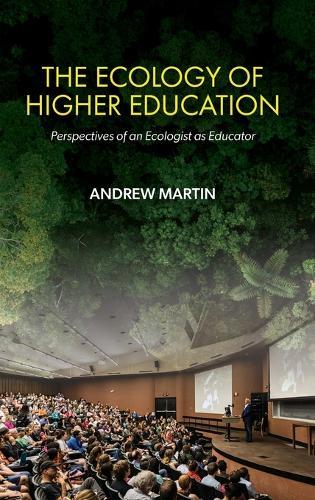
OverviewShows how ecological models of change can be applied to education. Higher education needs to change, and it is already changing as a consequence of technology and the implementation of tools from artificial intelligence. There are natural processes of change that have been happening since the beginning of life on Earth, including ecological and evolutionary change. This book explores the value of adapting these processes to education, to show convincingly that educators have much to learn from paying attention to the emergent processes of ecology. Through examples that span a scale from individuals to communities, it provides examples and perspectives that can help change our thinking and enact practices that can enable all students to achieve greatness. Rather than directing education toward specific objectives, ecology shows that we can support students on unique educational journeys through an emphasis on student-centeredness, collaborative interactions, and building communities of people and ideas in the minds of students. Full Product DetailsAuthor: Andrew Martin (Professor, University of Colorado-Boulder)Publisher: State University of New York Press Imprint: State University of New York Press Dimensions: Width: 15.20cm , Height: 2.60cm , Length: 22.90cm ISBN: 9798855805055Pages: 364 Publication Date: 01 January 2026 Audience: Professional and scholarly , Professional & Vocational Format: Hardback Publisher's Status: Forthcoming Availability: Not yet available This item is yet to be released. You can pre-order this item and we will dispatch it to you upon its release. Table of ContentsReviews""This book is a novel perspective on understanding teaching and learning in higher education through the lens of ecological frameworks on emergence. The author draws from many science educators and ecologists. He also notes some voices from education and higher education scholarship. The book builds on itself to present the perspectives of how ecological frameworks, particularly in that of emergence, should be considered heavily in higher education structures and systems in relation to student learning."" — Trisha Teig, Higher Education and Leadership Studies, University of Denver Author InformationAndrew Martin is a professor of Ecology and Evolutionary Biology and a Presidential Teaching Scholar at the University of Colorado in Boulder. His research spans orders of magnitude of biological organization, from microbes that cause infectious diseases to communities of species in terrestrial, freshwater and marine environments, to the formation and dynamics of social networks in the classroom. Tab Content 6Author Website:Countries AvailableAll regions |
||||