Overview
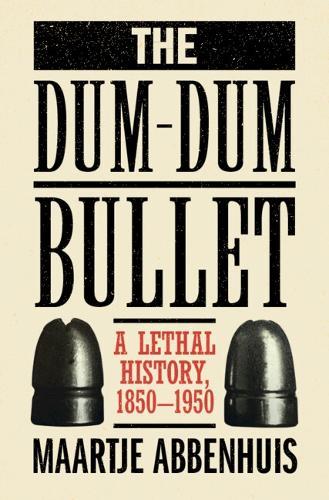
In this innovative and accessible history of small arms and gun violence, Maartje Abbenhuis reveals how the invention of ready-to-use rifle cartridges in the industrial era revolutionised gun violence on and off the battlefield and made death accessible to all. The most famous of these expanding bullets, which flooded the market from the 1850s onward, was the dum-dum bullet. This bullet fundamentally altered perceptions of who might use a gun and when. The book examines why, of all military inventions, this bullet was regulated by international law, and traces the changing landscape of public responses to its use and abuse through the many wars and instances of state violence during the first half of the twentieth century. It shows that the legal framing of this 'barbarous' ammunition helped to entrench public expectations around its unacceptability, yet also hid a world of actual violence that employed the same technology repeatedly.
Full Product Details
Author: Maartje Abbenhuis (University of Auckland)
Publisher: Cambridge University Press
Imprint: Cambridge University Press
Dimensions:
Width: 16.10cm
, Height: 2.40cm
, Length: 23.10cm
Weight: 0.638kg
ISBN: 9781009712910
ISBN 10: 1009712918
Pages: 312
Publication Date: 04 June 2026
Audience:
General/trade
,
General
Format: Hardback
Publisher's Status: Active
Availability: Manufactured on demand

We will order this item for you from a manufactured on demand supplier.
Reviews
'This is a fascinating story of transgression and technology. Recounting the social processes through which weapons shift from the mundane to the taboo, Abbenhuis offers a comprehensive history of the dum-dum bullet. This is a sophisticated cultural analysis of a simple and mundane socio-technical system. With so little academic attention paid to the evolution of ammunition, it is a reminder to scholars that what is overlooked often has a rich and world-changing story. Heartily recommended.' Matthew Ford, author of Weapon of Choice 'Maartje Abbenhuis has written a jaw-dropping history of a bullet that changed the way we think about lethal violence, both on and off the battlefield. It asks us to reflect on transgression and technology, international norms and laws, and what it means to kill and be killed.' Joanna Bourke, author of Wounding the World 'What is a transgressive weapon? Why are some ways to maim and kill acceptable, whilst others are not? These are the questions that Maartje Abbenhuis seeks to unpick in this groundbreaking new book. In particular, Abbenhuis moves beyond the traditional foci of these arguments on law and technology to explore the cultural creation of transgression. The book examines the way dum-dum bullets were discussed and presented in the Anglo-European media environment in an effort to unpick the interrelationships between culture, technology, and international law. By focusing on a mundane technology Abbenhuis also tells the story of every day violence spanning time, continents and even species, and in doing so highlights some of the paradoxes in international restrictions on technologies that were, and continue to be, consistently used across the globe on a daily basis.' Richard Dunley, author of Britain and the Mine 1900–1915
Author Information
Maartje Abbenhuis is Professor in Modern History in the School of Humanities at Waipapa Taumata Rau University of Auckland. She is the author of several critically acclaimed books and co-author of Global War, Global Catastrophe, which won the 2022 Tomlinson Prize.