Overview
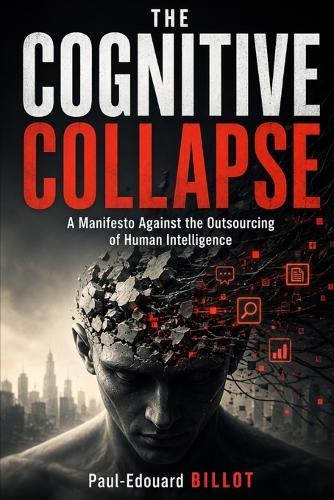
""I asked an AI to write a condolence message for a friend whose mother had just died. The message was perfect. And that terrified me."" This is not a book about artificial intelligence. It is a book about what artificial intelligence is doing to us. For the first time in human history, we are not outsourcing our labor, our memory, or our arithmetic. We are outsourcing our judgment: the capacity to sit with a difficult question, to reason from incomplete information toward a decision we are willing to own, to write a condolence message from scratch, because doing so forces us to locate, in ourselves, exactly what we feel. And we are doing it rationally. One individually defensible delegation at a time. THE COGNITIVE COLLAPSE documents the neurological, professional, generational, and civilizational consequences of this process: the hollow professional who can direct AI brilliantly but cannot produce independent analysis; the physician whose diagnostic accuracy declines as the AI's improves; the first generation raised by conversational AI, for whom not-knowing feels like an emergency; the democratic institutions that govern through algorithms they cannot explain, while citizens have delegated the reasoning required to hold them accountable. Drawing on neuroscience, professional case studies, the history of cognitive technology, and the framework of systems resilience, the book introduces twelve original concepts, from the Delegation Threshold and the Friction Paradox to the Expertise Hollow and the Cognitive Divide, that name the dynamics of a transformation most people sense but cannot articulate. This is not a book about AI danger in the conventional sense. The danger it describes requires no superintelligence, no rogue algorithm, no dramatic failure. It requires only that we continue doing what we are already doing, at the pace we are already doing it, for another decade. But THE COGNITIVE COLLAPSE does not end in despair. It ends with a concept, a framework, and a choice. The concept is cognitive sovereignty: the deliberate preservation of independent human thinking in an AI-saturated world. Not anti-AI. Pro-human. The framework is practical: four pillars of cognitive resilience, a 30-day protocol, and the Human-in-Command design principles for individuals and institutions that want to remain, in the fullest sense of the word, in command. The choice is the one the preceding pages have been building toward: the choice between the tenant, who occupies a cognitive capacity that belongs to whoever provides the tool, and the proprietor, who maintains their own mind deliberately and can look at what they have built and say: this is mine. The window for making that choice is still open. For readers of Thinking, Fast and Slow, Stolen Focus, Sapiens, and Antifragile. For anyone who has caught themselves asking an AI to write something that belonged to them, and felt, in that moment, a discomfort they could not name.
Full Product Details
Author: Paul-Edouard Billot
Publisher: Independently Published
Imprint: Independently Published
Dimensions:
Width: 15.20cm
, Height: 1.00cm
, Length: 22.90cm
Weight: 0.263kg
ISBN: 9798198999930
Pages: 190
Publication Date: 29 May 2026
Audience:
General/trade
,
General
Format: Paperback
Publisher's Status: Active
Availability: Available To Order

We have confirmation that this item is in stock with the supplier. It will be ordered in for you and dispatched immediately.