Overview
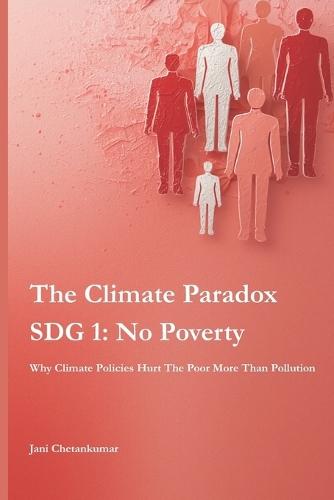
""A climate policy that ignores inequality is not sustainability. It is taxation with better marketing."" Climate change is widely framed as the defining challenge of our time. Governments introduce carbon taxes, corporations publish ESG reports, and individuals are encouraged to adopt sustainable lifestyles. Yet one critical question remains largely unexamined: Who is actually paying the price for climate action? In The Climate Paradox - SDG 1: No Poverty, Jani Chetankumar presents a clear, data-driven analysis of how modern climate policies, sustainability frameworks, and green technologies can increase economic inequality instead of reducing it. This book is part of The Climate Paradox Series, which examines contradictions within climate action, carbon markets, ESG systems, and sustainable development goals through a structured and critical lens. Across global economies, a consistent pattern is emerging. Carbon taxes increase the cost of fuel, electricity, and basic goods. Clean technologies such as electric vehicles and solar systems often require high upfront investment. Sustainable products are frequently positioned as premium offerings. At the same time, corporate narratives shift responsibility toward individual behavior, while large-scale emissions remain structurally embedded in economic systems. These dynamics create a measurable imbalance. Higher-income groups, responsible for a larger share of emissions, have greater access to incentives, subsidies, and alternatives. Lower-income households, with limited flexibility, face rising costs in energy, transport, food, and housing. The result is a paradox: Those who contribute the least to climate change often bear the highest relative cost of addressing it. This book examines these issues through economic reasoning, policy observation, and real-world examples. It highlights how well-intended climate strategies can produce unintended consequences when affordability, access, and structural inequality are not addressed. Key themes include: The economic impact of carbon pricing on different income groups Affordability gaps in clean technology adoption Limitations of ESG frameworks and green market incentives The shift of environmental responsibility from systems to individuals The intersection of climate policy and income inequality The objective is not to reject climate action, but to improve its design. Sustainability cannot function as a premium option accessible only to those with financial capacity. Climate policies must align environmental goals with economic realities, ensuring that solutions are scalable across income levels and geographic contexts. This book is intended for readers seeking a more grounded understanding of climate action, including policymakers, sustainability professionals, ESG analysts, investors, researchers, and entrepreneurs. The central argument is straightforward: A transition that ignores inequality cannot deliver long-term environmental outcomes. Effective climate action requires not only technological innovation and policy ambition, but also economic inclusion and structural accountability. The Climate Paradox - SDG 1: No Poverty provides a framework to examine climate solutions with clarity, helping readers distinguish between actions that create real impact and those that primarily reshape perception.
Full Product Details
Author: Jani Chetankumar
Publisher: Independently Published
Imprint: Independently Published
Dimensions:
Width: 15.20cm
, Height: 0.70cm
, Length: 22.90cm
Weight: 0.141kg
ISBN: 9798257538100
Pages: 108
Publication Date: 15 April 2026
Audience:
General/trade
,
General
Format: Paperback
Publisher's Status: Active
Availability: Available To Order

We have confirmation that this item is in stock with the supplier. It will be ordered in for you and dispatched immediately.