Overview
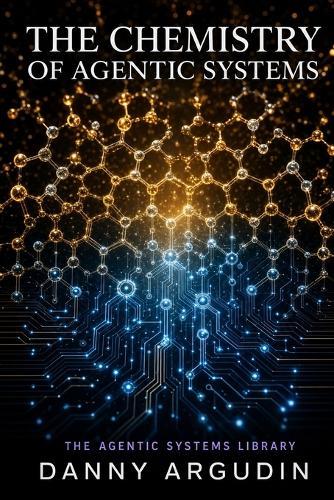
Your logs read clean. Your traces show successful execution. Every agent ran. Every call returned. The outputs are still wrong. This is the most common and least diagnosable class of failure in agentic AI systems: emergent, interaction-dependent, history-driven failures that do not show up in any instrument designed for deterministic software. The pipeline is working. The chemistry is wrong. The Chemistry of Agentic Systems applies five chemical principles to multi-agent AI development, giving practitioners a diagnostic vocabulary for the class of failures that standard debugging cannot address. The five principles: Limiting Reagent: Every pipeline has a constraining resource. Adding more AI capacity cannot improve throughput beyond what that resource allows. Finding it - and it is rarely where the slowdown appears - is the first diagnostic step. Retrosynthesis: Most architecture failures are discovered three weeks into building. Planning backwards from the required final output, rather than forward from available tools, makes hidden gaps visible before they become reconstruction projects. Kinetic and Thermodynamic Control: The same pipeline, at different points in its life, requires different optimization modes. Applying sprint speed to architectural decisions produces fragile structure. Applying architectural caution to sprint deliverables produces missed windows. Knowing which mode is correct - and when the switch must happen - is a diagnostic skill. Assay and Purification: Threshold checks are proxies for quality measurement, not quality measurement itself. A pipeline that passes outputs forward without assaying their identity, concentration, contamination, stability, and traceability is a pipeline that propagates plausible garbage downstream. The five-dimension Purity Checklist makes assay practical. Autocatalysis: Agentic systems that capture and reuse their own outputs can improve their own performance over time. They can also degrade their own performance over time, when the feedback loop runs on contaminated products. Understanding which direction the loop is running - and why - determines whether the system is a compounding asset or a compounding liability. The book includes the Chemistry Diagnostic Sequence for reading failing systems, the Conflict Resolution Matrix for when the five principles point in different directions, the Repair Classification Guide for distinguishing chemistry-level repairs from patches that compound, and the Portfolio Chemistry Map for practitioners maintaining multiple systems simultaneously. Written for engineers, technical leads, and AI operations practitioners who already have systems running and need vocabulary precise enough to name what is going wrong, explain it to colleagues, and choose the intervention that addresses the cause rather than the symptom.
Full Product Details
Author: Danny Argudin
Publisher: Independently Published
Imprint: Independently Published
Dimensions:
Width: 15.20cm
, Height: 0.90cm
, Length: 22.90cm
Weight: 0.236kg
ISBN: 9798199177818
Pages: 170
Publication Date: 29 May 2026
Audience:
General/trade
,
General
Format: Paperback
Publisher's Status: Active
Availability: Available To Order

We have confirmation that this item is in stock with the supplier. It will be ordered in for you and dispatched immediately.