Overview
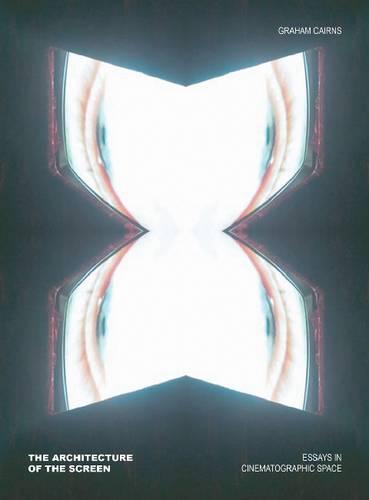
With the birth of film came the birth of a revolutionary visual language. This new, unique vocabulary—the cut, the fade, the dissolve, the pan, and a new idea of movement gave not only artists but also architects a completely new way to think about and describe the visual. The Architecture of the Screen examines the interrelations between the visual language of film and the onscreen perception of space and architectural design, revealing how film’s visual vocabulary influenced architecture in the twentieth century and continues to influence it today. Graham Cairns draws on film reviews, architectural plans, and theoretical texts to illustrate the unusual and fascinating relationship between the worlds of filmmaking and architecture.
Full Product Details
Author: Graham Cairns
Publisher: Intellect
Imprint: Intellect Books
Dimensions:
Width: 17.80cm
, Height: 1.90cm
, Length: 22.90cm
Weight: 0.576kg
ISBN: 9781841507118
ISBN 10: 1841507113
Pages: 360
Publication Date: 15 November 2013
Audience:
College/higher education
,
Professional and scholarly
,
Postgraduate, Research & Scholarly
,
Professional & Vocational
Format: Paperback
Publisher's Status: Active
Availability: Manufactured on demand

We will order this item for you from a manufactured on demand supplier.
Reviews
Graham Cairns's book is an innovative and welcome addition to the dialogue between cinema and architecture. Recently established as a field of research, this interdisciplinary terrain is relevant to other disciplines beyond architecture and film. Its influence is already evident in established fields such as history, geography, and cultural and language studies, but it is also gaining ground in other areas. This book is an opportunity to explore the alternative and complementary intelligence this field opens up, and which can be injected at various stages of creative design processes. --Francois Penz<br>--Fran ois Penz, author of the foreword
'Recommended. Lower-division undergraduates and above; general readers.'
Graham Cairns's book is an innovative and welcome addition to the dialogue between cinema and architecture. Recently established as a field of research, this interdisciplinary terrain is relevant to other disciplines beyond architecture and film. Its influence is already evident in established fields such as history, geography, and cultural and language studies, but it is also gaining ground in other areas. This book is an opportunity to explore the alternative and complementary intelligence this field opens up, and which can be injected at various stages of creative design processes. --Francois Penz--Fran ois Penz, author of the foreword
Graham Cairns's book is an innovative and welcome addition to the dialogue between cinema and architecture. Recently established as a field of research, this interdisciplinary terrain is relevant to other disciplines beyond architecture and film. Its influence is already evident in established fields such as history, geography, and cultural and language studies, but it is also gaining ground in other areas. This book is an opportunity to explore the alternative and complementary intelligence this field opens up, and which can be injected at various stages of creative design processes. --Fran ois Penz, author of the foreword
Author Information
Graham Cairns is a visiting scholar in architecture and design at both Florida State University and Ravensbourne, UK.