Overview
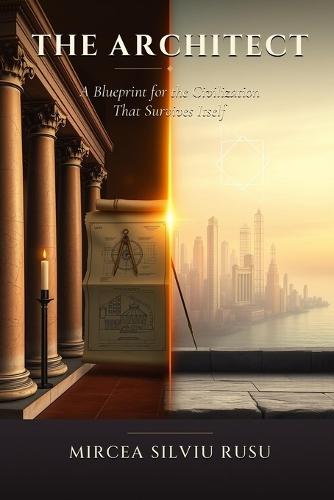
P R E F A C EThis book was written in a period when the architecture ofhuman civilization began to visibly fail, in plain view of the very peopleit was built to serve. e institutions that govern our money, our laws, ourwork, our information, and our wars were designed for a world that no longerexists - a world of isolated communities, slow messengers, and modest tools.We now live inside a single, instantaneous, planetary network, and we aregoverning it with paperwork, with patronage, and with the inherited reexesof empires that did not survive their own contradictions.The argument of these pages is simple, and it is severe. Either humanitydesigns, in this century, an operating system worthy of its capacities, or it willlose the chance to design anything at all. e window is not abstract. It ismeasured in decades, not in centuries, and it is shrinking under the combinedweight of ecological pressure, weapons capable of ending us in an aernoon, intelligences that already exceed us in narrow domains, and political systemsincapable of acting at the speed of the problems they have created.What follows is not a prophecy and not a manifesto. It is a blueprint - along, patient, technically honest attempt to describe how a civilization of eightbillion people, on one planet today and on many tomorrow, could be governedin a way that preserves dignity, makes corruption structurally impossible, places intelligence under human authority, returns work to human purpose, and points the species toward a single shared horizon. None of it reuiressaints. All of it reuires architecture.The reader should know, at the outset, what this book is not. It is not thedesign of a world government; it proposes a federation that any communitymay join, adapt, or leave. It is not anti-technological; it treats technology as thesubstrate on which the next civilization will either be built well or be builtcarelessly. It is not utopian; every claim made here is measured against theevidence we already have, and every failure mode is named in the open. It is notthe property of any party, religion, or nation. It is oered, in the most literalsense, to whoever will use it.A word about the form. is is written as an old book because thequestions it asks are old. How shall we live together? How shall we begoverned? What is owed to those who come aer us? e new answer reuiresnew instruments, but the uestion is the oldest uestion we have. I havetherefore allowed myself the liberty of writing in the voice of an architectaddressing an apprentice - patient, declarative, unhurried, and unwilling toatter.If you have opened this book, you already suspect that the presentarrangement of the world will not hold. You are not wrong. What follows is thecase that, even now, there is something better available to us - not as a dream, but as a buildable structure, drawn here in full, so that any group of seriouspeople, in any city or any country, can begin construction the day they decideto begin.- M. S. R.
Full Product Details
Author: Mircea Silviu Rusu
Publisher: Independently Published
Imprint: Independently Published
Volume: 1
Dimensions:
Width: 15.20cm
, Height: 1.30cm
, Length: 22.90cm
Weight: 0.376kg
ISBN: 9798198005617
Pages: 200
Publication Date: 21 May 2026
Audience:
General/trade
,
General
Format: Paperback
Publisher's Status: Active
Availability: Available To Order

We have confirmation that this item is in stock with the supplier. It will be ordered in for you and dispatched immediately.