Overview
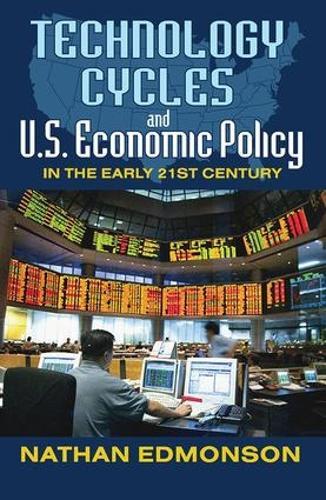
The overarching theme of this volume is the cyclical nature of technological change, its impact on economic growth, and the limits of government intervention. Technological revolutions are infrequent; there were only three in all of the twentieth century. When they occur, their possibilities are often not immediately apparent. Technology revolutions induce capital investment, not just because they stimulate the need to acquire the new technology, but also because of the need to replace obsolete capacity and new infrastructure.While government has encouraged general economic progress by carrying out highly risky innovations unrelated to fostering economic growth, it seldom succeeds with specific efforts to foster growth. Recent examples of success include the Internet and the global positioning system (GPS), which trace their origins to defense-related research. In contrast, the countercyclical economic stimuli of 2007-2009 have achieved little in the way of general growth. The lack of data about the technology cycle makes formulating appropriate monetary and other policy countercyclical interventions difficult.A technology-founded upswing animated the American economy after 1990, and the 'great recession' of 2007- 2009 reflected the waning of the investment boom that this revolution generated. Edmonson argues that the impact of technology revolutions on general economic growth has never received the attention it deserves. This volume will contribute much to debates on economic policy.
Full Product Details
Author: Nathan Edmonson ,
Nathan Edmonson
Publisher: Taylor & Francis Inc
Imprint: Routledge
Dimensions:
Width: 15.20cm
, Height: 1.80cm
, Length: 22.90cm
Weight: 0.385kg
ISBN: 9781412843058
ISBN 10: 1412843057
Pages: 192
Publication Date: 15 February 2012
Audience:
College/higher education
,
Postgraduate, Research & Scholarly
Format: Hardback
Publisher's Status: Active
Availability: In Print

This item will be ordered in for you from one of our suppliers. Upon receipt, we will promptly dispatch it out to you. For in store availability, please contact us.
Reviews
<p> Edmonson offers a unique perspective on a serious issue. ... Edmonson brings to bear his training as a professional economist along with extensive historical knowledge and impressive understandings of science and engineering topics. This is a valuable book for anyone wishing to go beyond the standard media debates about today's economy. --Arthur E. Kartman, San Diego State University <p> Technology Cycles and U.S. Economic Policy in the Early 21st Century by Nathan Edmonson stresses the importance of technology cycles in the formulation of effective counter-cyclical economic policy. The confluence of powerful inventions and innovations occurs episodically and leads to highly profitable investment opportunities and an upswing in economic activity. Conversely, after a sometimes substantial period of time, the technology-founded cycle wanes, and the number of productive investment opportunities falls, If, as in 1929 and 2007, a financial crisis occurs during such a downswing, traditional expansionary monetary policy is less effective in fostering growth and employment may eventually lead to bubbles and inflation. The book is interesting and ranges broadly over related issues such as recognizing the technology cycle, counter-cyclical fiscal policy, tax policy, industrial policy, the risk in predicting the future path of technology, the problems of plant and equipment, workers, and materials displaced by technology and recession. Recommended reading. --Richard D. Raddock, former member, Federal Reserve Board
<p> Economist Edmonson... argues that technology cycles are an important feature of the modern economy... Edmonson traces out this notion of technology cycles and then considers the ramifications when interacting with the financial sector, as well as how financial cyclicality interacts with technological cyclicality... Recommended. <p> --D. Mitch, Choice <p> Edmonson offers a unique perspective on a serious issue. ... Edmonson brings to bear his training as a professional economist along with extensive historical knowledge and impressive understandings of science and engineering topics. This is a valuable book for anyone wishing to go beyond the standard media debates about today's economy. <p> --Arthur E. Kartman, San Diego State University <p> Technology Cycles and U.S. Economic Policy in the Early 21st Century by Nathan Edmonson stresses the importance of technology cycles in the formulation of effective counter-cyclical economic policy. The confluence of powerful inventions and innovations occurs episodically and leads to highly profitable investment opportunities and an upswing in economic activity. Conversely, after a sometimes substantial period of time, the technology-founded cycle wanes, and the number of productive investment opportunities falls, If, as in 1929 and 2007, a financial crisis occurs during such a downswing, traditional expansionary monetary policy is less effective in fostering growth and employment may eventually lead to bubbles and inflation. The book is interesting and ranges broadly over related issues such as recognizing the technology cycle, counter-cyclical fiscal policy, tax policy, industrial policy, the risk in predicting the future path of technology, the problems of plant and equipment, workers, and materials displaced by technology and recession. Recommended reading. <p> --Richard D. Raddock, former member, Federal Reserve Board
-Economist Edmonson... argues that technology cycles are an important feature of the modern economy... Edmonson traces out this notion of technology cycles and then considers the ramifications when interacting with the financial sector, as well as how financial cyclicality interacts with technological cyclicality... Recommended.- --D. Mitch, Choice -Edmonson offers a unique perspective on a serious issue. ... Edmonson brings to bear his training as a professional economist along with extensive historical knowledge and impressive understandings of science and engineering topics. This is a valuable book for anyone wishing to go beyond the standard media debates about today's economy.- --Arthur E. Kartman, San Diego State University -Technology Cycles and U.S. Economic Policy in the Early 21st Century by Nathan Edmonson stresses the importance of technology cycles in the formulation of effective counter-cyclical economic policy. The confluence of powerful inventions and innovations occurs episodically and leads to highly profitable investment opportunities and an upswing in economic activity. Conversely, after a sometimes substantial period of time, the technology-founded cycle wanes, and the number of productive investment opportunities falls, If, as in 1929 and 2007, a financial crisis occurs during such a downswing, traditional expansionary monetary policy is less effective in fostering growth and employment may eventually lead to bubbles and inflation. The book is interesting and ranges broadly over related issues such as recognizing the technology cycle, counter-cyclical fiscal policy, tax policy, industrial policy, the risk in predicting the future path of technology, the problems of plant and equipment, workers, and materials displaced by technology and recession. Recommended reading.- --Richard D. Raddock, former member, Federal Reserve Board