Overview
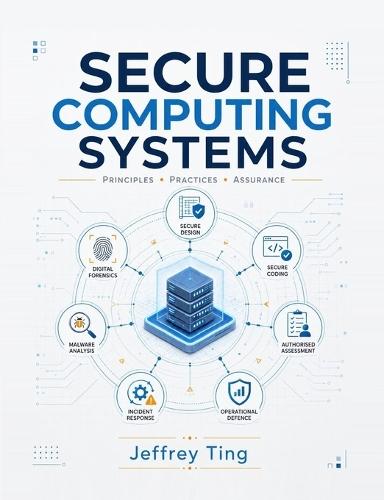
Secure Computing Systems provides a clear, structured introduction to modern system security for postgraduate students, computing students, early-career security professionals, and practitioners who want a stronger foundation in secure development, assessment, defence, incident response, and digital forensics. Security is not something that can be added at the end of a project. It has to be considered across the whole lifecycle: from requirements and design, through coding and assessment, into live operation, incident handling, and evidence-based improvement. This book treats secure computing as a connected discipline, rather than a collection of isolated tools, techniques, or checklists. Written in an accessible textbook style, the book explains the principles and practical reasoning behind secure systems without assuming prior specialist security experience. It is aimed at readers who already have a general computing background and want to understand how secure systems are designed, built, assessed, defended, and investigated. Across seventeen chapters, the book covers: secure computing as a lifecycle security by design and threat modelling secure coding failure modes language, dependency, and review risk law, ethics, and rules of engagement reconnaissance, scanning, and vulnerability assessment web, API, identity, and business-logic failures configuration exploitation and privilege escalation network threats and network defence cloud security architecture detection engineering and security operations malware vectors, prevention, and analysis workflows incident response and incident coordination digital forensics and DFIR The emphasis throughout is on responsible, evidence-based security practice. The book does not provide step-by-step exploitation recipes. Instead, it explains vulnerability mechanisms, control choices, trade-offs, limitations, and the professional responsibilities that sit around security work. Each chapter includes learning outcomes, conceptual explanations, technical workflows, worked examples, summaries, and review questions. Case studies and current practice sections connect the material to real security practice, while references to recognised frameworks and communities such as NIST, OWASP, MITRE, CISA, NCSC, and SANS help readers place the material in a wider professional context. Secure Computing Systems is suitable for taught modules in cyber security, secure software engineering, computer science, and digital forensics. It is also useful as a practical reference for developers, system administrators, security analysts, and technical managers who need to understand how security decisions fit together across the full system lifecycle.
Full Product Details
Author: Jeffrey Ting
Publisher: Independently Published
Imprint: Independently Published
Dimensions:
Width: 18.90cm
, Height: 1.20cm
, Length: 24.60cm
Weight: 0.422kg
ISBN: 9798199225427
Pages: 232
Publication Date: 30 May 2026
Audience:
General/trade
,
General
Format: Paperback
Publisher's Status: Active
Availability: Available To Order

We have confirmation that this item is in stock with the supplier. It will be ordered in for you and dispatched immediately.