Overview
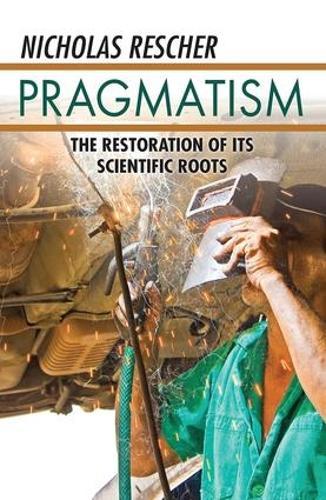
Pragmatism is rooted in the linking of practice and theory. It describes a process where theory is extracted from practice, and applied back to practice to form what is called intelligent practice. Pragmatism was intended, by Charles S. Peirce, its founder, as a doctrine for the rational substantiation of knowledge claims. For Peirce, what mattered was successful prediction and control. Practice was to serve as the arbiter of theory. Objective efficacy, not personal satisfaction, is what matters for fixing opinion in a community of rational inquirers. According to Nicholas Rescher, later pragmatists saw the matter differently. They envisioned subjective satisfactions, rather than objectively determinable functional effectiveness, as being the aim of the enterprise. Rescher notes that William James, in particular, had an agenda different from that of Peirce. The two pragmatisms are complete opposites, Rescher argues, in terms of claims and intentions. James's soft pragmatism abandons the classical idea of inquiry as the paramount of truth; it believes that truth is an illusion, an unrealizable figment of the imagination. By contrast, Peirce's hard pragmatism believes that the classic idea of truth remains valid. Rescher seeks to examine and explore pragmatism dialectically, with a conviction that brings pragmatism to life for specialist and generalist alike.
Full Product Details
Author: Nicholas Rescher ,
Nicholas Rescher
Publisher: Taylor & Francis Inc
Imprint: Routledge
Dimensions:
Width: 15.20cm
, Height: 2.30cm
, Length: 22.90cm
Weight: 0.750kg
ISBN: 9781412846127
ISBN 10: 1412846129
Pages: 320
Publication Date: 15 April 2012
Audience:
General/trade
,
General
Format: Hardback
Publisher's Status: Active
Availability: In Print

This item will be ordered in for you from one of our suppliers. Upon receipt, we will promptly dispatch it out to you. For in store availability, please contact us.
Reviews
-Rescher (philosophy, U. of Pittsburgh) criticizes pragmatists' departure from Charles Pierce's original commitments to objective truth in favor of subjective, relativistic criteria based in language and psychological satisfaction. He argues that Pierce's pragmatism relied on an understanding of efficacy determined by the impersonal constraints of reality, not the achievement of solely human purposes, which he attributes to pragmatists like William James, John Dewey and Richard Rorty.... After his introductory essay carving out the stakes of his polemic, he systematically applies his Piercean outlook on major topics such cognition, rational inquiry, logic, morality, politics, metaphysical realism, religion, art.- --Book News -In this book Nicholas Rescher applies his prolific and lucid intelligence to a topic of great interest to him throughout much of his philosophical life. He distinguishes his objective pragmatism from popular caricatures that distort it almost beyond recognition. The true scientific pragmatism, prominently and properly associated with Charles Sanders Peirce, is shown to be defensible against the familiar objections that apply to the caricatures. This is accomplished with impressive success: thoroughly, but also concisely, lucidly, and readably.- --Ernest Sosa, Board of Governors Professor, Rutgers University -Nicholas Rescher has written a detailed, comprehensive study of pragmatism to return it behind the widespread contemporary stress on a Jamesian approach to its original Peiercean roots. Rescher skillfully calls attention to the deep interest of an objectivist form of pragmatism for rational inquiry of all kinds science, logic, politics, metaphysics, religion and other domains. This very useful work should be widely used.- --Tom Rockmore, McAnultyCollege Distinguished Professor and Professor of Philosophy, Duquesne University Rescher (philosophy, U. of Pittsburgh) criticizes pragmatists' departure from Charles Pierce's original commitments to objective truth in favor of subjective, relativistic criteria based in language and psychological satisfaction. He argues that Pierce's pragmatism relied on an understanding of efficacy determined by the impersonal constraints of reality, not the achievement of solely human purposes, which he attributes to pragmatists like William James, John Dewey and Richard Rorty.... After his introductory essay carving out the stakes of his polemic, he systematically applies his Piercean outlook on major topics such cognition, rational inquiry, logic, morality, politics, metaphysical realism, religion, art. --Book News In this book Nicholas Rescher applies his prolific and lucid intelligence to a topic of great interest to him throughout much of his philosophical life. He distinguishes his objective pragmatism from popular caricatures that distort it almost beyond recognition. The true scientific pragmatism, prominently and properly associated with Charles Sanders Peirce, is shown to be defensible against the familiar objections that apply to the caricatures. This is accomplished with impressive success: thoroughly, but also concisely, lucidly, and readably. --Ernest Sosa, Board of Governors Professor, Rutgers University Nicholas Rescher has written a detailed, comprehensive study of pragmatism to return it behind the widespread contemporary stress on a Jamesian approach to its original Peiercean roots. Rescher skillfully calls attention to the deep interest of an objectivist form of pragmatism for rational inquiry of all kinds science, logic, politics, metaphysics, religion and other domains. This very useful work should be widely used. --Tom Rockmore, McAnultyCollege Distinguished Professor and Professor of Philosophy, Duquesne University Rescher (philosophy, U. of Pittsburgh) criticizes pragmatists' departure from Charles Pierce's original commitments to objective truth in favor of subjective, relativistic criteria based in language and psychological satisfaction. He argues that Pierce's pragmatism relied on an understanding of efficacy determined by the impersonal constraints of reality, not the achievement of solely human purposes, which he attributes to pragmatists like William James, John Dewey and Richard Rorty.... After his introductory essay carving out the stakes of his polemic, he systematically applies his Piercean outlook on major topics such cognition, rational inquiry, logic, morality, politics, metaphysical realism, religion, art. --Book News In this book Nicholas Rescher applies his prolific and lucid intelligence to a topic of great interest to him throughout much of his philosophical life. He distinguishes his objective pragmatism from popular caricatures that distort it almost beyond recognition. The true scientific pragmatism, prominently and properly associated with Charles Sanders Peirce, is shown to be defensible against the familiar objections that apply to the caricatures. This is accomplished with impressive success: thoroughly, but also concisely, lucidly, and readably. --Ernest Sosa, Board of Governors Professor, Rutgers University Nicholas Rescher has written a detailed, comprehensive study of pragmatism to return it behind the widespread contemporary stress on a Jamesian approach to its original Peiercean roots. Rescher skillfully calls attention to the deep interest of an objectivist form of pragmatism for rational inquiry of all kinds science, logic, politics, metaphysics, religion and other domains. This very useful work should be widely used. --Tom Rockmore, McAnultyCollege Distinguished Professor and Professor of Philosophy, Duquesne University In this book Nicholas Rescher applies his prolific and lucid intelligence to a topic of great interest to him throughout much of his philosophical life. He distinguishes his objective pragmatism from popular caricatures that distort it almost beyond recognition. The true scientific pragmatism, prominently and properly associated with Charles Sanders Peirce, is shown to be defensible against the familiar objections that apply to the caricatures. This is accomplished with impressive success: thoroughly, but also concisely, lucidly, and readably. --Ernest Sosa, Board of Governors Professor, Rutgers University Nicholas Rescher has written a detailed, comprehensive study of pragmatism to return it behind the widespread contemporary stress on a Jamesian approach to its original Peiercean roots. Rescher skillfully calls attention to the deep interest of an objectivist form of pragmatism for rational inquiry of all kinds science, logic, politics, metaphysics, religion and other domains. This very useful work should be widely used. --Tom Rockmore, McAnultyCollege Distinguished Professor and Professor of Philosophy, Duquesne University In this book Nicholas Rescher applies his prolific and lucid intelligence to a topic of great interest to him throughout much of his philosophical life. He distinguishes his objective pragmatism from popular caricatures that distort it almost beyond recognition. The true scientific pragmatism, prominently and properly associated with Charles Sanders Peirce, is shown to be defensible against the familiar objections that apply to the caricatures. This is accomplished with impressive success: thoroughly, but also concisely, lucidly, and readably. --Ernest Sosa, Board of Governors Professor, Rutgers University
<p> In this book Nicholas Rescher applies his prolific and lucid intelligence to a topic of great interest to him throughout much of his philosophical life. He distinguishes his objective pragmatism from popular caricatures that distort it almost beyond recognition. The true scientific pragmatism, prominently and properly associated with Charles Sanders Peirce, is shown to be defensible against the familiar objections that apply to the caricatures. This is accomplished with impressive success: thoroughly, but also concisely, lucidly, and readably. --Ernest Sosa, Board of Governors Professor, Rutgers University