Overview
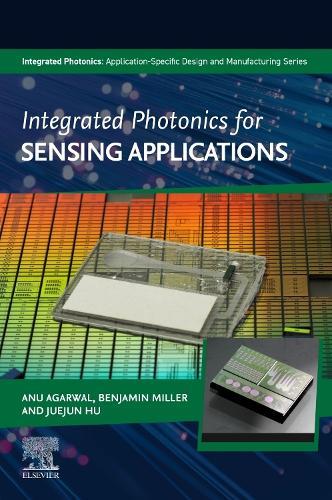
Integrated Photonics for Sensing Applications introduces sensors as an important application area for integrated photonics. It provides a brief historical perspective and highlights key free-space spectroscopic sensing techniques such as FTIR, Raman, SPR, and reflectometry, and it thoroughly explores the advantages of photonic integrated circuit (PIC) sensor systems, which have the potential for low SWAP-C and high performance. The topics covered include sensor system components such as waveguides (for optical wavelengths less than and greater than 1550 nm), ring resonators and toroids, photonic crystals, MZ interferometers, light input and output, light sources (wavelengths less than and greater than 1550 nm), and spectrometers and detectors. The book considers integrated systems that employ biofunctionalization/sorbents for applications in chem–bio sensing, and it also addresses sensor manufacturing at scale, including materials, PDK development, and sensor packaging.
Full Product Details
Author: Anu Agarwal (Principal Research Scientist, Massachusetts Institute of Technology, Cambridge, MA, USA) ,
Benjamin Miller (Professor, University of Rochester Medical Center, School of Medicine and Dentistry, Rochester, NY, USA) ,
Juejun Hu (Professor, Massachusetts Institute of Technology, Cambridge, MA, USA)
Publisher: Elsevier - Health Sciences Division
Imprint: Elsevier - Health Sciences Division
Weight: 0.450kg
ISBN: 9780443265785
ISBN 10: 044326578
Pages: 350
Publication Date: 01 June 2026
Audience:
Professional and scholarly
,
College/higher education
,
Professional & Vocational
,
Postgraduate, Research & Scholarly
Format: Paperback
Publisher's Status: Active
Availability: In Print

This item will be ordered in for you from one of our suppliers. Upon receipt, we will promptly dispatch it out to you. For in store availability, please contact us.
Author Information
Anu Agarwal is a Principal Research Scientist at MIT, where she is developing an integrated Si-CMOS compatible platform of linear and non-linear materials for photonic devices and systems, especially in the mid-IR regime, for hyperspectral imaging and chem-bio sensing, because most chemical pollutants and biological toxins have their fingerprints in this range. Benjamin Miller joined the University of Rochester faculty in 1996, where he is currently Dean’s Professor of Dermatology, Biochemistry and Biophysics, Biomedical Engineering, and Optics. His group’s expertise in interferometric and photonic sensing has been applied to the development of several novel optical biosensor platforms, and his group’s work on RNA-targeted drug discovery has resulted in synthetic compounds targeting RNAs involved in several human diseases. Juejun (JJ) Hu is currently the John F. Elliott Professor of Materials Science and Engineering at MIT. His primary research interest covers new optical materials exemplified by chalcogenide compounds, as well as enhanced photon-matter interactions in nanophotonic structures. He has authored and coauthored over 150 refereed journal publications and technologies developed in his lab have led to several spin-off companies.