Overview
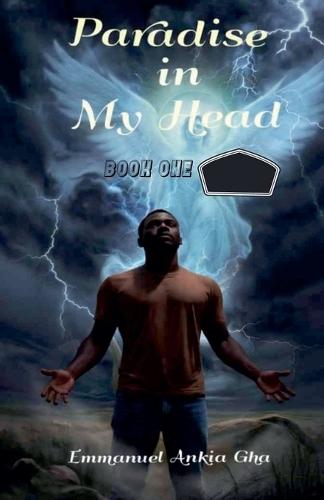
_Paradise in My Head_ is not a book about answers. It is a book about the weight of questions when you are forced to live them. Across forty lives, forty deaths, and forty returns, it follows Aurelius, a young philosopher who cannot sleep because he cannot solve the oldest problem: If God is good, why is the world not paradise? The Angel does not give him a theory. She gives him a door. And through it, a knife. Book One: The Question opens in a cramped scholar's study. Aurelius is paralyzed. Books tower around him like judges. Every system he reads, from Augustine to Nietzsche, explains suffering but does not end it. At midnight, the knock comes. The Angel does not look like flame or light. She looks tired. She tells him the rules: No debates. No memory between lives. He must live each one fully, as if it were his only one. Only at the end will he remember. Terrified, he agrees. What follows is not a tour of virtue. It is an autopsy of capacity. He wakes first as a legless beggar in a city that rains without end. He learns the geometry of hunger: how pride costs calories, how a single coin buys both bread and shame. He dies unnoticed. The Angel asks: _Was your existence necessary?_ He has no answer, because he never chose to be born, never chose to be broken. Then he is a king. Young, absolute, well meaning. He signs a decree to feed the north. The paper passes through ten hands. By the time it reaches the village, it is a tax. People starve under his mercy. He learns that good intent is not a shield. The crown does not make you good. It makes you heavy. The lives accelerate. He is a black woman blacksmith in a village at war, and paradise becomes one night without sirens. He is an ugly merchant who buys beauty, lovers, and praise, and learns that acquisition is a hole you pour yourself into. He is a mother during famine who must choose which child eats, and watches philosophy dissolve when both children are crying. He is a monk who finds silence, only to hear the world burning outside the walls. He is a surgeon who believes in nothing but chemistry until his daughter dies on his table and his scalpel becomes a question aimed at heaven. He is a child who dies at eight, full of laughter and scraped knees, and the Angel asks: _If there was no purpose after, was the laughter still real?_ By Chapter 10, Aurelius has no theories left. He has only scars.
Full Product Details
Author: Emmanuel Ankia Gha
Publisher: Smartworld Publishers
Imprint: Smartworld Publishers
Volume: 1
Dimensions:
Width: 14.00cm
, Height: 0.60cm
, Length: 21.60cm
Weight: 0.118kg
ISBN: 9798235932821
Pages: 92
Publication Date: 28 May 2026
Audience:
General/trade
,
General
Format: Paperback
Publisher's Status: Active
Availability: Available To Order

We have confirmation that this item is in stock with the supplier. It will be ordered in for you and dispatched immediately.
Author Information
Dr Ankia Enmanuel Gha is a lecturer at the Catholic University of Cameroon and has a PhD in Mechanology. He is the founder and President of the Smartworld Association for Constructive Education, Peace and Harmony (SWACEPH). He is equally the Chief Editor Smartworld Publishers.