Overview
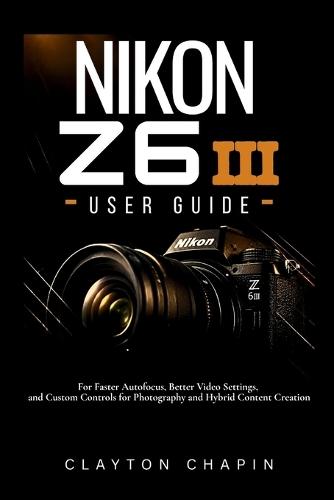
The Nikon Z6 III is one of the most capable hybrid mirrorless cameras available. Its partially stacked sensor, subject recognition autofocus, and 6K internal recording put it at a level that was out of reach for most working photographers and videographers just a few years ago. But capable hardware runs on the settings and decisions the operator makes, and the factory defaults are built for the general case, not for professional production environments. Created around the demands of corporate events, documentary location work, commercial hybrid production, wedding coverage, studio portrait sessions, and low-light event photography; this guide focuses on situations where the camera needs to respond quickly and every setting choice directly affects the final result. What you will learn: How to build and use shooting banks so your photo and video configurations stay independent and ready to switch without rebuilding from scratch How the autofocus hierarchy actually works, what the camera prioritizes, how persistence settings change tracking behavior in crowds and motion, and when to override the system manually How to configure custom buttons based on your own shooting patterns rather than copying someone else's layout How N-Log, Flat, and standard Picture Controls affect your entire post-production pipeline, not just how the footage looks on the EVF How to manage the photo-to-video transition without losing audio configuration, exposure settings, or format state How to choose between N-RAW, 10-bit H.265, and compressed delivery formats based on your actual editing system and delivery timeline How stabilization works physically and why technique still matters regardless of what IBIS compensates for How to handle card management, file naming, and ingest protocol across multi-day hybrid productions How to read and recover from the most common field failures, from autofocus jumps to thermal management to accidental format mismatches Each chapter is built around a production situation. The technical explanation comes after the context, not before it. The camera systems are explained as responses to real problems, which is how they are actually used. There is a point in every photographer's time with a camera system where it stops feeling like a tool you are operating and starts feeling like something you actually know. The configurations make sense. The recoveries are faster. The decisions are cleaner because you understand what the camera is doing and why. That point does not come from reading the manual. It comes from field hours and from knowing what questions to ask of the footage that comes back. This book compresses that process. It gives the field hours a better foundation.
Full Product Details
Author: Clayton Chapin
Publisher: Independently Published
Imprint: Independently Published
Dimensions:
Width: 15.20cm
, Height: 0.70cm
, Length: 22.90cm
Weight: 0.191kg
ISBN: 9798198570634
Pages: 136
Publication Date: 25 May 2026
Audience:
General/trade
,
General
Format: Paperback
Publisher's Status: Active
Availability: Available To Order

We have confirmation that this item is in stock with the supplier. It will be ordered in for you and dispatched immediately.