Overview
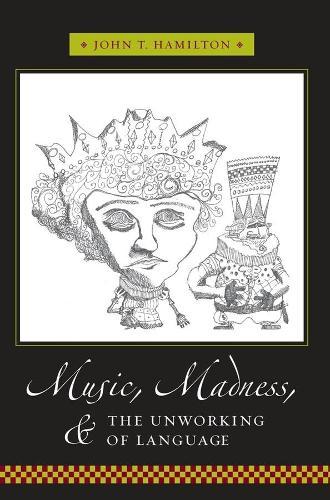
In the romantic tradition, music is consistently associated with madness, either as cause or cure. Writers as diverse as Kleist, Hoffmann, and Nietzsche articulated this theme, which in fact reaches back to classical antiquity and continues to resonate in the modern imagination. What John Hamilton investigates in this study is the way literary, philosophical, and psychological treatments of music and madness challenge the limits of representation and thereby create a crisis of language. Special focus is given to the decidedly autobiographical impulse of the late eighteenth and early nineteenth centuries, where musical experience and mental disturbance disrupt the expression of referential thought, illuminating the irreducible aspects of the self before language can work them back into a discursive system. The study begins in the 1750s with Diderot's Neveu de Rameau, and situates that text in relation to Rousseau's reflections on the voice and the burgeoning discipline of musical aesthetics. Upon tracing the linkage of music and madness that courses through the work of Herder, Hegel, Wackenroder, and Kleist, Hamilton turns his attention to E. T. A. Hoffmann, whose writings of the first decades of the nineteenth century accumulate and qualify the preceding tradition. Throughout, Hamilton considers the particular representations that link music and madness, investigating the underlying motives, preconceptions, and ideological premises that facilitate the association of these two experiences. The gap between sensation and its verbal representation proved especially problematic for romantic writers concerned with the ineffability of selfhood. The author who chose to represent himself necessarily faced problems of language, which invariably compromised the uniqueness that the author wished to express. Music and madness, therefore, unworked the generalizing functions of language and marked a critical limit to linguistic capabilities. While the various conflicts among music, madness, and language questioned the viability of signification, they also raised the possibility of producing meaning beyond significance.
Full Product Details
Author: John Hamilton (Professor, Harvard, FAS Department of Comparative Literature)
Publisher: Columbia University Press
Imprint: Columbia University Press
Dimensions:
Width: 15.20cm
, Height: 1.50cm
, Length: 22.90cm
Weight: 0.354kg
ISBN: 9780231142212
ISBN 10: 0231142218
Pages: 272
Publication Date: 07 May 2013
Audience:
Professional and scholarly
,
Professional & Vocational
Format: Paperback
Publisher's Status: Active
Availability: Manufactured on demand

We will order this item for you from a manufactured on demand supplier.
Language: English
Reviews
As a study of a literary obsession, Hamilton's book will remain a key text for those interested in the genesis of the idea of ineffable music. Eighteenth Century Music 2/1/2010 [A] superb book... a living testimony that philological learning and literary sensibility can be happily compatible. -- Herbert Lindenberger Modern Language Quarterly 6/1/10 An extremely accomplished work that provides a powerful insight into a potentially important historical topic. -- Ian Miller H-Disability 8/1/10
As a study of a literary obsession, Hamilton's book will remain a key text for those interested in the genesis of the idea of ineffable music. * Eighteenth Century Music * [A] superb book... a living testimony that philological learning and literary sensibility can be happily compatible. -- Herbert Lindenberger * Modern Language Quarterly * An extremely accomplished work that provides a powerful insight into a potentially important historical topic. -- Ian Miller * H-Disability *
Author Information
John T. Hamilton is professor of comparative literature and Germanic literature at Harvard University. The author of Soliciting Darkness: Pindar, Obscurity, and the Classical Tradition (2003), he has also published extensively on German and French literature, aesthetics, and the afterlife of classical antiquity.