Overview
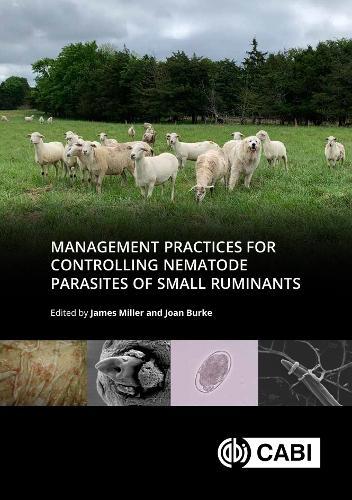
Gastrointestinal nematodes infect ruminant livestock throughout the world and are an important cause of disease and production loss. Since their invention, producers have heavily relied on broad spectrum anthelmintics to help control these parasites, however, intensive use has resulted in widespread resistance issues in nematode populations, especially Haemonchus contortus. Addressing the concerns of anthelmintic resistance, this book brings together research on management practices for controlling these nematodes in small ruminants. It covers: - The nematodes of greatest importance, such as Haemonchus contortus, Teladorsagia circumcincta, and Trichostrongylous spp., which frequently result in parasitic gastroenteritis; - Alternative approaches for nematode control, including the importance of adequate nutrition, methods for reducing pasture contamination, the role of genetics, grazing management systems and different forages; - Insights from the cattle industry, and where lessons can be learned across the species divide. With a focus on all small ruminants; sheep, goats and camelids, this book provides a useful resource for researchers and students of veterinary science, as well as practicing veterinarians and extension specialists.
Full Product Details
Author: Professor James Miller (Professor Emeritus, Louisiana State University, USA) ,
Dr Joan Burke (Research Animal Scientist, United States Department of Agriculture-Agricultural Research Station, USA) ,
Scott A. Bowdridge (West Virginia University,USA) ,
Ken Coffey (University of Arkansas)
Publisher: CABI Publishing
Imprint: CABI Publishing
ISBN: 9781800623743
ISBN 10: 1800623747
Pages: 192
Publication Date: 05 December 2025
Audience:
College/higher education
,
Professional and scholarly
,
Professional and scholarly
,
Tertiary & Higher Education
,
Professional & Vocational
Format: Hardback
Publisher's Status: Forthcoming
Availability: Not yet available

This item is yet to be released. You can pre-order this item and we will dispatch it to you upon its release.
Author Information
James Miller (Edited By) James Miller is a retired Emeritus Professor for Louisiana State University School of Veterinary Medicine where he taught and conducted research from 1984-2017. He received a B.S. degree (Biology) from the University of New Mexico, and D.V.M., M.P.V.M. (Preventive Medicine) and Ph.D (Parasitology) degrees from the University of California, Davis. He is board certified in parasitology in the American College of Veterinary Microbiology. He was the Everett D. Besch Endowed Professor of Veterinary Medicine and served as the Interim Dean for Research and Advanced Studies After retirement he elected to remain an active participant on several projects. He is a founding member (2001) of the American Consortium for Small Ruminant Parasite Control (www.wormx.info). He is author and/or co-author of numerous refereed journal articles, technical/report papers, proceedings papers, abstracts and book chapters. He has been a research collaborator with national and international organizations. He is affiliated with several professional organizations and participates as a consultant on two United States Department of Agriculture National Projects: Multi-state Project (NC-214, Increased Efficiency of Sheep Production) and Southern Coordinating Committee (SCC-81, Sustainable Small Ruminant Production in the Southeastern U.S). His research interests have been epidemiology, control, and genetics of ruminant nematode parasitism and during his active career his research program focused on improving ruminant production using an integrated approach to controlling parasites, specifically gastrointestinal nematodes of small ruminants. Joan Burke (Edited By) Joan Burke is a Research Animal Scientist with United States Department of Agriculture-Agricultural Research Station since 1999. She received a B.S. degree (Animal Science) from Cornell University and Ph.D. degree from Oregon State University. She is a founding member (2001) of the American Consortium for Small Ruminant Parasite Control. She conducts research on small ruminants with a focus on holistic gastrointestinal nematode. parasite control. She has published research articles, fact sheets and contributed to outreach events on management of gastrointestinal nematode parasites including using FAMACHA, copper oxide wire particles, sericea lespedeza, rotational grazing, genetic and genomic selection for parasite resistance, resilience and tolerance, and Duddingtonia flagrans (nematode-trapping fungus) as alternatives for traditional anthelmintic use. The genetic resistance of Katahdin sheep to nematode parasites led to collection of genotypes that were developed into genomic-enhanced estimated breeding values in the National Sheep Improvement Program.