Overview
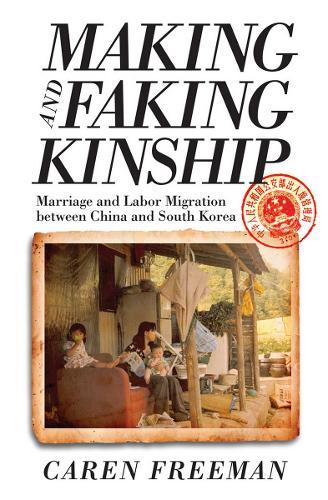
In the years leading up to and directly following rapprochement with China in 1992, the South Korean government looked to ethnic Korean (Chosonjok) brides and laborers from northeastern China to restore productivity to its industries and countryside. South Korean officials and the media celebrated these overtures not only as a pragmatic solution to population problems but also as a patriotic project of reuniting ethnic Koreans after nearly fifty years of Cold War separation. As Caren Freeman's fieldwork in China and South Korea shows, the attempt to bridge the geopolitical divide in the name of Korean kinship proved more difficult than any of the parties involved could have imagined. Discriminatory treatment, artificially suppressed wages, clashing gender logics, and the criminalization of so-called runaway brides and undocumented workers tarnished the myth of ethnic homogeneity and exposed the contradictions at the heart of South Korea's transnational kin-making project. Unlike migrant brides who could acquire citizenship, migrant workers were denied the rights of long-term settlement, and stringent quotas restricted their entry. As a result, many Chosonjok migrants arranged paper marriages and fabricated familial ties to South Korean citizens to bypass the state apparatus of border control. Making and Faking Kinship depicts acts of ""counterfeit kinship,"" false documents, and the leaving behind of spouses and children as strategies implemented by disenfranchised people to gain mobility within the region's changing political economy.
Full Product Details
Author: Caren Freeman ,
Caren Freeman
Publisher: Cornell University Press
Imprint: Cornell University Press
Dimensions:
Width: 15.20cm
, Height: 2.50cm
, Length: 22.90cm
Weight: 0.907kg
ISBN: 9780801449581
ISBN 10: 0801449588
Pages: 280
Publication Date: 22 November 2011
Recommended Age: From 18 years
Audience:
General/trade
,
General
Format: Hardback
Publisher's Status: Active
Availability: To order

Stock availability from the supplier is unknown. We will order it for you and ship this item to you once it is received by us.
Reviews
<p> A 'Korean wind' swept northeastern China in the late 1990s as ethnic Korean female residents of that region left seeking to marry rural bachelors in South Korea. . . . This sensitive, revealing ethnographic stud explores how matches hastily arranged during 'marriage tours' to China came under strain when the brides arrived in their new homes. -Andrew J. Nathan, Foreign Affairs (March/April 2013)
<p> Making and Faking Kinship makes a compelling contribution to the literature on contemporary migration with its insightful exploration of the workings of gender and nationalism in the marriage and labor migration between China and South Korea. This book should be read by those interested in diaspora studies, gender and migration studies, and Asian migration studies. -Rhacel Parrenas, University of Southern California
Freeman has written a brilliant book that illuminates the complex dynamics not only of South Korea and Northeast Asia but of migration involving ethnic identification and state policy, as well as migrants, families left behind and forged anew, kinship ties claimed and disputed, marriages faked, broken, and made, and the larger world they navigate....It is easily the best ethnography in Korean Studies to appear in some years and is therefore essential reading foranyone seeking to be conversant in Northeast Asia, migration, kinship, gender, family, and globalization. John Lie, Contemporary Sociology (2013)
<p> A 'Korean wind' swept northeastern China in the late 1990s as ethnic Korean female residents of that region left seeking to marry rural bachelors in South Korea. . . . This sensitive, revealing ethnographic stud explores how matches hastily arranged during marriage tours to China came under strain when the brides arrived in their new homes. Andrew J. Nathan, Foreign Affairs (March/April 2013)
Author Information
Caren Freeman is Director of Studies at Hereford Residential College and works in the International Studies Office at the University of Virginia.