Overview
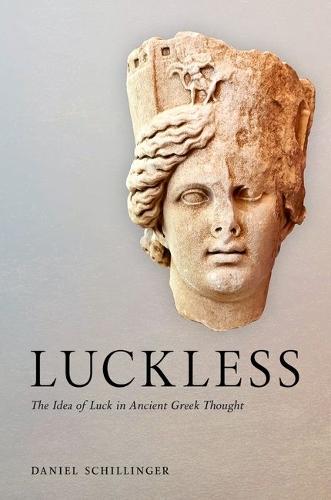
What is luck? What is the significance of luck for our ethical and political lives? Could it be the case that luck is an intoxicating illusion, which threatens to obscure the true explanations of human action, excuse wrongdoing or cowardice, provoke powerful emotions, and cloud judgment? Schillinger's original interpretation of the idea of luck in ancient Greek thought challenges both scholars of ancient Greek texts and theorists of luck in the present. While many contemporaries approach luck as something ""out there"" in the world that explains why some human beings flourish while others suffer or perish, Schillinger argues that luck is a psychological phenomenon: what we have in mind when we speak of ""luck"" are the intellectual and emotional reactions of human beings as they run up against the limits of their knowledge and power. Schillinger returns to the Greeks because they fully examined this phenomenon, revealing the roots of the idea of luck in the psyche, its (often confused) role in ethical judgments of praise and blame, and its salience as a rhetorical trope used by statesmen and demagogues. His analysis summons unfamiliar perspectives on these issues in ancient Greek thoughtDLperspectives that are acutely skeptical and attuned to both the realities of politics and the complexities of the human soul.
Full Product Details
Author: Daniel Schillinger (Lecturer in Political Science, Lecturer in Political Science, Yale University)
Publisher: Oxford University Press Inc
Imprint: Oxford University Press Inc
Dimensions:
Width: 16.60cm
, Height: 1.70cm
, Length: 23.60cm
Weight: 0.381kg
ISBN: 9780197690246
ISBN 10: 0197690246
Pages: 192
Publication Date: 04 June 2026
Audience:
College/higher education
,
Postgraduate, Research & Scholarly
Format: Hardback
Publisher's Status: Active
Availability: To order

Stock availability from the supplier is unknown. We will order it for you and ship this item to you once it is received by us.
Reviews
In this marvelous new book, Daniel Schillinger, taking his cue from Aristotle, offers subtle and original readings of a set of ancient Greek texts to reorient our understanding of luck from its being an agent ""out there"" to its moral, psychological, and rhetorical role in our political lives. No one, after reading this transformative work, will blithely invoke luck * whether good or badwithout thinking of Schillinger's rich readings of the ancient authors to demystify luck.Arlene Saxonhouse, University of Michigan * Elegantly written and deeply thoughtful, Luckless is a book that shows that classical texts can illuminate enduring questions of human life. That is often claimed about classical texts, but not always so well demonstrated as it is here. The questions Schillinger takes up concern the meaning of luck, its role in our lives, and its significance as a concept that dwells more in our minds or souls than in the external world. His interpretation of what the classical authors have to say about luck is original and thought-provoking. Luckless is a major contribution to the study of classical thought. * Devin Stauffer, Professor and Associate Chair of Government at the University of Texas at Austin * Do you feel lucky? Are you actually lucky? Luckless investigates how our stories about luck too often obscure the real reasons for things, both good and bad. We want to believe in luck, but we need to look behind luck's veil if we are to address the ethical and political crises confronting us today. Cogent, lucid, and revelatory, Daniel Schillinger's book will transform your thinking about luck, full stop. * Joel Alden Schlosser, Professor of Political Science and Fairbank Professor of Humanities, Bryn Mawr College *
In this marvelous new book, Daniel Schillinger, taking his cue from Aristotle, offers subtle and original readings of a set of ancient Greek texts to reorient our understanding of luck from its being an agent ""out there"" to its moral, psychological, and rhetorical role in our political lives. No one, after reading this transformative work, will blithely invoke luck * whether good or badwithout thinking of Schillinger's rich readings of the ancient authors to demystify luck.Arlene Saxonhouse, University of Michigan * Elegantly written and deeply thoughtful, Luckless is a book that shows that classical texts can illuminate enduring questions of human life. That is often claimed about classical texts, but not always so well demonstrated as it is here. The questions Schillinger takes up concern the meaning of luck, its role in our lives, and its significance as a concept that dwells more in our minds or souls than in the external world. His interpretation of what the classical authors have to say about luck is original and thought-provoking. Luckless is a major contribution to the study of classical thought. * Devin Stauffer, Professor and Associate Chair of Government at the University of Texas at Austin *
""In this marvelous new book, Daniel Schillinger, taking his cue from Aristotle, offers subtle and original readings of a set of ancient Greek texts to reorient our understanding of luck from its being an agent ""out there"" to its moral, psychological, and rhetorical role in our political lives. No one, after reading this transformative work, will blithely invoke luck--whether good or bad--without thinking of Schillinger's rich readings of the ancient authors to demystify luck."" --Arlene Saxonhouse, University of Michigan
Author Information
Daniel Schillinger is a Lecturer in Political Science at Yale University, where he teaches in the Directed Studies Program and offers seminars on Greek political thought. He is also a Senior Fellow of the Yale Center for Civic Thought and a recipient of the Lux et Veritas teaching prize.