Overview
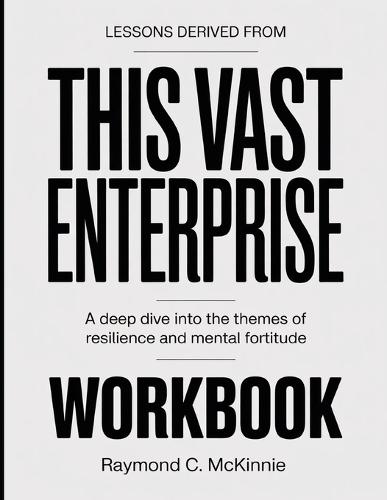
Lessons Derived From This Vast Enterprise Scale Magnifies Both Strength and Weakness This work begins with a key insight: when something grows large-whether a business, system, or vision-its strengths become more powerful, but its weaknesses also become more exposed and consequential. Structure Becomes Essential at Every Level of Growth A vast enterprise cannot rely on improvisation alone. The book emphasizes that systems, processes, and clear frameworks are what allow complexity to function without collapsing. Leadership Must Evolve With Expansion What works at a small scale often fails at a larger one. Leadership must shift from direct control to strategic oversight, delegation, and trust in systems and people. Communication Is the Lifeline of Complexity As an organization grows, communication becomes more difficult but more important. Misalignment at scale can lead to inefficiency, confusion, or failure. Vision Must Remain Clear Amid Expansion Growth can dilute purpose if not carefully managed. The book highlights the importance of maintaining a strong, consistent vision that guides every level of operation. People Are the Core of Any Enterprise Even in large systems, success depends on individuals. Skills, motivation, and alignment of people determine whether structures succeed or fail. Efficiency Requires Continuous Refinement A vast system is never ""finished."" It requires ongoing evaluation, improvement, and adjustment to remain effective and relevant. Decisions Have Amplified Consequences at Scale In large systems, even small decisions can have widespread impact. This demands careful thinking, foresight, and responsibility. Delegation Is Not Loss of Control but Expansion of Capacity The book teaches that trusting others with responsibility is necessary for growth. Effective delegation increases reach and efficiency. Culture Determines Long-Term Stability Systems alone are not enough. A strong internal culture ensures consistency, accountability, and shared direction across all levels. Adaptability Is Required for Survival Large enterprises must respond to changing environments-economic, technological, and social-or risk becoming obsolete. Complexity Must Be Managed, Not Feared Complexity is inevitable in large systems. The lesson is to design ways to manage it rather than avoid it. Innovation Sustains Long-Term Relevance Without innovation, even successful systems stagnate. Continuous improvement and creativity are essential for longevity. Risk Management Becomes a Central Discipline The larger the system, the greater the exposure to risk. Anticipating, preparing for, and mitigating risk becomes critical.
Full Product Details
Author: Raymond C McKinnie
Publisher: Independently Published
Imprint: Independently Published
Dimensions:
Width: 21.60cm
, Height: 0.40cm
, Length: 27.90cm
Weight: 0.187kg
ISBN: 9798195723620
Pages: 70
Publication Date: 29 May 2026
Audience:
General/trade
,
General
Format: Paperback
Publisher's Status: Active
Availability: Available To Order

We have confirmation that this item is in stock with the supplier. It will be ordered in for you and dispatched immediately.