Awards
- Winner of American Association for Italian Studies Book Prizes: Medieval, Renaissance and Baroque 2013
- Winner of American Association for Italian Studies Book Prizes: Medieval, Renaissance and Baroque 2013.
- Winner of Medieval, Renaissance and Baroque Book Prize, American Association for Italian Studies 2013
Overview
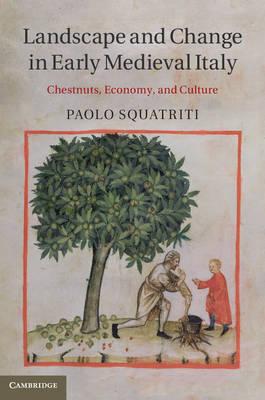
This innovative environmental history of the long-lived European chestnut tree and its woods offers valuable perspectives on the human transition from the Roman to the medieval world in Italy. Integrating evidence from botanical and literary sources, individual charters and case studies of specific communities, the book traces fluctuations in the size and location of Italian chestnut woods to expose how early medieval societies changed their land use between the fourth and eleventh centuries, and in the process changed themselves. As the chestnut tree gained popularity in late antiquity and became a valuable commodity by the end of the first millennium, this study brings to life the economic and cultural transition from a Roman Italy of cities, agricultural surpluses and markets to a medieval Italy of villages and subsistence farming.
Full Product Details
Author: Paolo Squatriti (University of Michigan, Ann Arbor)
Publisher: Cambridge University Press
Imprint: Cambridge University Press
Dimensions:
Width: 15.20cm
, Height: 1.60cm
, Length: 22.90cm
Weight: 0.510kg
ISBN: 9781107034488
ISBN 10: 1107034485
Pages: 252
Publication Date: 16 May 2013
Audience:
Professional and scholarly
,
Professional & Vocational
Format: Hardback
Publisher's Status: Active
Availability: Manufactured on demand

We will order this item for you from a manufactured on demand supplier.
Reviews
'... densely laden as it is with relevant facts and observations, [this] book is a solid achievement, and its modestly presented thesis deserves to be appreciated beyond the niche of medieval arboreal history.' Jacob Wamberg, Speculum 'This book is an absolute treat, delicious in its detail, surprising in just how much a tree's view of medieval history can reveal about people. Paolo Squatriti's research on the rise of the chestnut, a tree little cultivated in the Roman period yet a major crop for medieval Italy, identifies the convergences between the worlds of men and woodlands. It is written with humour and intelligence, and nearly each page contains a discovery about botany, biology, cuisine or legal practice.' Caroline Goodson, Early Medieval Europe ... densely laden as it is with relevant facts and observations, [this] book is a solid achievement, and its modestly presented thesis deserves to be appreciated beyond the niche of medieval arboreal history. Jacob Wamberg, Speculum This book is an absolute treat, delicious in its detail, surprising in just how much a tree's view of medieval history can reveal about people. Paolo Squatriti's research on the rise of the chestnut, a tree little cultivated in the Roman period yet a major crop for medieval Italy, identifies the convergences between the worlds of men and woodlands. It is written with humour and intelligence, and nearly each page contains a discovery about botany, biology, cuisine or legal practice. Caroline Goodson, Early Medieval Europe
'... densely laden as it is with relevant facts and observations, [this] book is a solid achievement, and its modestly presented thesis deserves to be appreciated beyond the niche of medieval arboreal history.' Jacob Wamberg, Speculum
'... densely laden as it is with relevant facts and observations, [this] book is a solid achievement, and its modestly presented thesis deserves to be appreciated beyond the niche of medieval arboreal history.' Jacob Wamberg, Speculum 'This book is an absolute treat, delicious in its detail, surprising in just how much a tree's view of medieval history can reveal about people. Paolo Squatriti's research on the rise of the chestnut, a tree little cultivated in the Roman period yet a major crop for medieval Italy, identifies the convergences between the worlds of men and woodlands. It is written with humour and intelligence, and nearly each page contains a discovery about botany, biology, cuisine or legal practice.' Caroline Goodson, Early Medieval Europe
Author Information
Paolo Squatriti is Associate Professor of History and Romance Languages and Literatures at the University of Michigan. He specialises in the study of the pre-industrial environment and has published on ecological and landscape change in the Dark Ages.