Overview
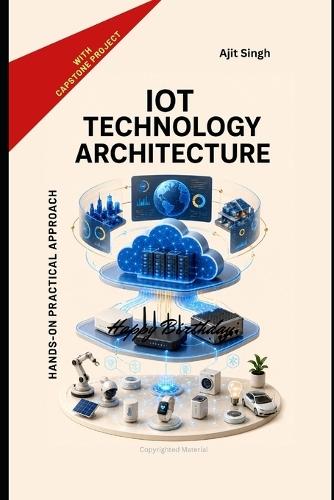
""IoT Technology Architecture"" is not a traditional textbook; it is an applied engineering manual, a developer's blueprint, and an architect's reference guide rolled into one comprehensive volume. The core objective of this text is to take the reader from the absolute basics of a bare microcontroller and elevate their skills until they are capable of designing, building, deploying, and maintaining a fully functioning, enterprise-grade Internet of Things architecture. Every page is deliberately structured to bridge the gap between abstract concepts and tangible, functioning applications. Philosophy The foundational philosophy of this book is ""Implementation over Abstraction."" In the modern tech industry, knowing the definition of a technology holds very little value if you cannot deploy it to solve a real-world problem. Consequently, this text operates on the belief that complex systems are best mastered by building them from scratch. Key Features 1. Complete Lifecycle Coverage: The book covers the absolute beginning of hardware selection all the way to final production deployment and lifecycle maintenance. 2. Strictly Step-by-Step Code: No pseudocode. The book provides actual, working code snippets for microcontrollers (C++/Python) and cloud integrations, fully explained line-by-line. 3. Industry-Relevant Tools: Focuses heavily on the tools actually utilized in the current market, including MQTT brokers, RESTful APIs, AWS/Azure IoT Core, Time-Series Databases, and Docker containers for Edge devices. 4. Robust Security Frameworks: Rather than treating security as an afterthought, security models (encryption, certificates, identity management) are built directly into the practical exercises. 5. Capstone Synthesis: The final chapter contains an unparalleled DIY capstone project. It fuses every concept from the preceding nine chapters into one live, working industrial system, providing the reader with a portfolio-ready project. Key Takeaways By the time the reader completes the final capstone project, they will possess a highly desirable, monetizable skill set. Key takeaways include: 1. The ability to classify, select, and wire appropriate sensors and actuators for specific industrial use cases. 2. Mastery over local data processing and edge computing deployments. 3. The capability to architect and provision secure, scalable IoT cloud infrastructures. 4. The skill to write, test, and deploy functional firmware and software applications. 5. A complete understanding of how to protect an IoT network from external cyber threats. 6. The confidence to transition a prototype into a fully manufactured, production-ready enterprise solution. Disclaimer: Earnest request from the Author. Kindly go through the table of contents and refer kindle edition for a glance on the related contents. Thank you for your kind consideration!
Full Product Details
Author: Ajit Singh
Publisher: Independently Published
Imprint: Independently Published
Dimensions:
Width: 15.20cm
, Height: 1.50cm
, Length: 22.90cm
Weight: 0.386kg
ISBN: 9798198998803
Pages: 288
Publication Date: 28 May 2026
Audience:
General/trade
,
General
Format: Paperback
Publisher's Status: Active
Availability: Available To Order

We have confirmation that this item is in stock with the supplier. It will be ordered in for you and dispatched immediately.