|
Overview
Full Product Details
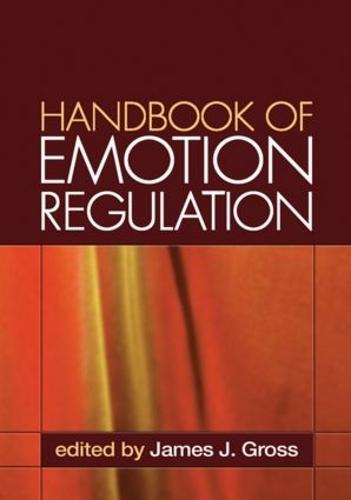
Author: James J. Gross
Publisher: Guilford Publications
Imprint: Guilford Publications
Dimensions:
Width: 17.40cm
, Height: 3.60cm
, Length: 24.60cm
Weight: 1.358kg
ISBN: 9781593851484
ISBN 10: 1593851480
Pages: 654
Publication Date: 15 February 2007
Audience:
College/higher education
,
General/trade
,
Tertiary & Higher Education
,
General
Replaced By: 9781462503506
Format: Hardback
Publisher's Status: Out of Print
Availability: In Print 
Limited stock is available. It will be ordered for you and shipped pending supplier's limited stock.
Table of Contents
Part 1. Foundations. Gross, Thompson, Emotion Regulation: Conceptual Foundations. Part 2. Biological Bases. Quirk, Prefrontal–Amygdala Interactions in the Regulation of Fear. Davidson, Fox, Kalin, Neural Bases of Emotion Regulation in Nonhuman Primates and Humans. Beer, Lombardo, Insights into Emotion Regulation from Neuropsychology. Ochsner, Gross, The Neural Architecture of Emotion Regulation. Hariri, Forbes, Genetics of Emotion Regulation. Part 3. Cognitive Foundations. Zelazo, Cunningham, Executive Function: Mechanisms Underlying Emotion Regulation. Peterson, Park, Explanatory Style and Emotion Regulation. Loewenstein, Affective Regulation and Affective Forecasting. McClure, Botvinick, Yeung, Greene, Cohen, Conflict Monitoring in Cognition–Emotion Competition. Part 4. Developmental Approaches. Calkins, Hill, Caregiver Influences on Emerging Emotion Regulation: Biological and Environmental Transactions in Early Development. Thompson, Meyer, Socialization of Emotion Regulation in the Family. Stegge, Terwogt, Awareness and Regulation of Emotion in Typical and Atypical Development. Eisenberg, Hofer,Vaughan, Effortful Control and its Socioemotional Consequences. Charles, Carstensen, Emotion Regulation and Aging. Part 5. Personality Processes and Individual Differences. Rothbart, Sheese, Temperament and Emotion Regulation. John, Gross, Individual Differences in Emotion Regulation. Westen, Blagov, A Clinical–empirical Model of Emotion Regulation: From Defense and Motivated Reasoning to Emotional Constraint Satisfaction. Wranik, Barrett, Salovey, Intelligent Emotion Regulation: Is Knowledge Power? Baumeister, Zell, Tice, How Emotions Facilitate and Impair Self-Regulation. Part 6. Social Approaches. Bargh, Williams,The Nonconscious Regulation of Emotion. Shaver, Mikulincer, Adult Attachment Strategies and the Regulation of Emotion. Rimé, Interpersonal Emotion Regulation. Mesquita, Albert, The Cultural Regulation of Emotions. Watts, Emotion Regulation and Religion. Part 7. Clinical Applications. Mullin, Hinshaw, Emotion Regulation and Externalizing Disorders in Children and Adolescents. Campbell-Sills, Barlow, Incorporating Emotion Regulation into Conceptualizations and Treatments of Anxiety and Mood Disorders. Sher, Grekin, Alcohol and Affect Regulation. Linehan, Bohus, Lynch, Dialectical Behavior Therapy for Pervasive Emotion Dysregulation: Theoretical and Practical Underpinnings. Sapolsky, Stress, Stress-related Disease, and Emotional Regulation. Appendix.
Reviews
This handbook is an invaluable resource for researchers and clinicians interested in emotion, mood, and self-regulation. It brings together leaders in diverse fields to explore the biological and psychosocial underpinnings and clinical implications of emotion regulation. A suitable primary or secondary text for a seminar on emotion regulation, this volume is likely to become a classic in the field. --Susan Nolen-Hoeksema, PhD, Yale University If human beings are fundamentally in the business of pursuing pleasure and avoiding pain, then this book is about the most fundamental aspect of human life. At long last, the world's experts on emotion regulation have come together to provide a grand tour of the research landscape, and the result is well worth the price of admission. Both students and scientists will find much to be learned in these pages. --Daniel Gilbert, PhD, Harvard University The Handbook of Emotion Regulation is a handbook in the finest sense--it is comprehensive, scholarly, interesting, and current. Its scope is impressive, moving from theory to clinical application, from cellular to societal levels of analysis, and across the lifespan from childhood to old age. Students will find it accessible, and anyone whose work touches on emotion regulation will find it eminently useful. --Susan Folkman, PhD, Osher Center for Integrative Medicine, University of California, San Francisco Emotion regulation is a dynamic, burgeoning research topic. Its siren call toward happier, less conflictual, even healthier lives is hard to resist. Gross has brought together a formidable array of experts to illustrate the ferment, diversity, and uncertainty of the field. This handbook is unique in its coverage. Many of the chapters take adult psychology as their starting point, but ample space is devoted to neural processes, cross-species comparison, and developmental changes in emotion regulation, as well as individual differences and their clinical implications. There are
This handbook is an invaluable resource for researchers and clinicians interested in emotion, mood, and self-regulation. It brings together leaders in diverse fields to explore the biological and psychosocial underpinnings and clinical implications of emotion regulation. A suitable primary or secondary text for a seminar on emotion regulation, this volume is likely to become a classic in the field. --Susan Nolen-Hoeksema, PhD, Yale University If human beings are fundamentally in the business of pursuing pleasure and avoiding pain, then this book is about the most fundamental aspect of human life. At long last, the world's experts on emotion regulation have come together to provide a grand tour of the research landscape, and the result is well worth the price of admission. Both students and scientists will find much to be learned in these pages. --Daniel Gilbert, PhD, Harvard University The Handbook of Emotion Regulation is a handbook in the finest sense--it is comprehensive, schol
Gross very nicely captures the range of topics and issues surrounding the topic of emotion and emotion regulation in this edited volume....Each chapter is very readable and thorough....Gross has done an excellent job of integrating and synthesising the various chapters, giving meaning across the entire book and encouraging the contributors to write chapters that will not go stale within a year or two of publication. Attention to this detail is particularly important given the enormous and rapid growth in the field of emotion....Given the scope of the volume, it should have wide appeal to researchers as well as graduate and advanced undergraduate human development, child clinical psychology, psychiatry, and cognitive and affective neuroscience. -- Canadian Psychology Selections are easy to read, comprehensive, and thought provoking....An excellent selection of readings that will inspire researchers in the field....The handbook highlights the work that has been done on emotion regulation and suggests future work that still needs to be done in order to understand the various facets of emotion regulation. -- APA PsycCRITIQUES This book presents impressive multidisciplinary research addressing one of the most interesting conundrums of the human condition; i.e., how we can simultaneously control and be controlled by our emotions....This volume is a valuable reference for researchers and clinicians interested in either healthy or unhealthy management of emotions. It also would be an excellent text for graduate seminars devoted to the topic of emotions....Confirmed in each and every chapter of this volume, emotion regulation is extraordinarily complex and should be approached in themental health field with this perspective. Although the field is far from the point of extracting simple evidence-based therapies for emotion-related disorders, this excellent book places clinicians and researchers on a more realistic path toward that laudable goal. -- Journal of the American Medical Association <p> An up-to-date and authoritative text on emotion regulation. It is written at an appropriate level for both researchers and students interested in this field, regardless of their discipline. Readers will find diverse perspectives that are carefully integrated throughout the text and make for an edifying experience....5 Stars! -- Doody's Review Service
Author Information
Edited by James J. Gross, PhD, Department of Psychology, Stanford University, Stanford, CA, USA
Tab Content 6
Author Website:
Countries Available
All regions
|