|
|
|||
|
||||
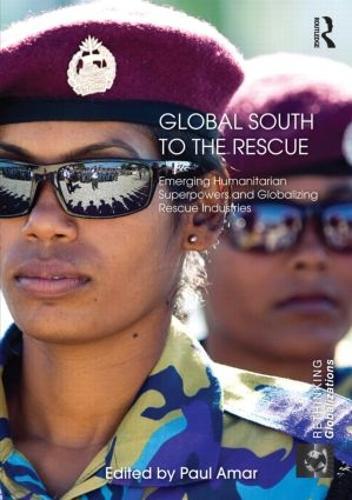
OverviewIn the 21st century, globalizing development agendas have often become inseparable from militarized or ""securitized"" interventions: aid missions embed themselves in walled police compounds, international organizations focus on quelling insurgencies, private investments flood the protection sector, and trade agreements are built on or broken by questions of national security, food security, oil security, etc. Recent studies have argued that this merging of developmentalism and securitization has been legitimized and enacted by discourses of humanitarianism and human security, and by the neo-colonial politics of tutelage and protection. The scholarship on this development/security nexus has focused its critique on European or North American interventions, particularly in states occupied in times of war, or in so-called ""failed states"" where national sovereignty is weak and imperial legacies are strong. But these studies have left unexamined the role of states and transnational formations in the global south as agents except when seen as receivers or victims of Eurocentric agendas. This collection addresses these gaps in the literature by focusing, instead, on emergent powers in the global south that are transforming and deploying distinct internationalist security and development models. This book was published as a special issue of Globalizations. Full Product DetailsAuthor: Paul Amar (University of California Santa Barbara, USA)Publisher: Taylor & Francis Ltd Imprint: Routledge Volume: 1 Weight: 0.560kg ISBN: 9780415577953ISBN 10: 0415577950 Pages: 216 Publication Date: 04 July 2012 Audience: College/higher education , Tertiary & Higher Education Format: Hardback Publisher's Status: Active Availability: In Print This item will be ordered in for you from one of our suppliers. Upon receipt, we will promptly dispatch it out to you. For in store availability, please contact us. Table of Contents"Foreword 1. Introduction: Global South to the Rescue Section One: Globalizing Peacekeeper Identities 2. Peacexploitation? Interrogating Labor Hierarchies and Global Sisterhood Amongst Indian and Uruguayan Female Peacekeepers 3. Martial Races and Enforcement Masculinities of the Global South: Weaponising Fijian, Chilean, and Salvadoran Postcoloniality in the Mercenary Sector 4. The Pacification of Soldiering, and the Militarization of Development: Contradictions Inherent in Provincial Reconstruction in Afghanistan Section Two: Assertive ""Regional Internationalisms"" 5. Turkey: An Emerging Hub of Globalization and Internationalist Humanitarian Actor? 6. Globalising Security Culture and Knowledge in Practice: Nigeria’s Hybrid Model 7. Indonesia and the Liberal Peace: Recovering Southern Agency in Global Governance 8. Kenya and International Security: Enabling Globalization, Stabilising ‘Stateness,’ and Deploying ‘Humanitarian Counterterrorism’ Section Three: Emergent Alternative Paradigms 9. Bolivarian Globalization?: The New Left’s Struggle in Latin America and the Caribbean to Negotiate a Revolutionary Approach to Humanitarian Militarism and International Intervention 10. Brazil’s Grand Design for Combining Global South Solidarity and National Interests: A Discussion of Peacekeeping Operations in Haiti and Timor 11. Egypt as a Globalist Power: Mapping Military Participation in Decolonizing Internationalism, Repressive Entrepreneurialism, and Humanitarian Globalization between the Revolutions of 1952 and 2011"ReviewsAuthor InformationPaul Amar is an Assistant Professor, Law and Society Program, University of California, Santa Barbara, USA. He is a political sociologist and urban ethnographer specializing in security politics, police-military relations, humanitarian law and authoritarian states. He researches the transnational and urban dynamics of police militarization as well as state violence against racial and sexual minorities in the cities of Latin America and the Middle East. Dr. Amar has worked at the United Nations, and on behalf of community struggles to fight police brutality and military atrocity, and to strengthen institutions of citizenship and cultures of legality. Tab Content 6Author Website:Countries AvailableAll regions |
||||