|
|
|||
|
||||
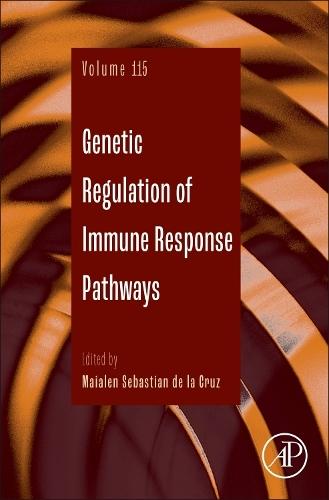
OverviewGenetic Regulation of Immune Response Pathways Full Product DetailsAuthor: Ainara Castellanos-Rubio (University of the Basque Country and Ikerbasque, Basque Foundation for Science, Leioa, Spain) , Maialen Sebastian de la CruzPublisher: Elsevier Science Publishing Co Inc Imprint: Academic Press Inc Weight: 0.720kg ISBN: 9780443473364ISBN 10: 0443473366 Pages: 376 Publication Date: 23 January 2026 Audience: Professional and scholarly , Professional & Vocational Format: Hardback Publisher's Status: Active Availability: Manufactured on demand We will order this item for you from a manufactured on demand supplier. Table of ContentsReviewsAuthor InformationAinara Castellanos-Rubio obtained her PhD on Genetics from the University of the Basque Country (Spain) in 2010. During her PhD, she studied gene expression alterations and genetic polymorphisms associated to Celiac Disease. She did a short term research stay in the University of Tampere (Finland) under the supervision of Dr. Marku Makki and Dr. Katri Lindfors where she used three dimensional cell cultures to describe different pathways involved in Celiac Disease development. On 2011 she joined the Laboratory of Dr. Sankar Ghosh in Columbia University (NY, USA) where she carried out her postdoctoral studies. During her postdoctoral training, she studied the implication of long noncoding RNAs (lncRNAs) in the immune and inflammatory response and she discovered and functionally characterized a novel lncRNA involved in the susceptibility to Celiac Disease. Dr. Castellanos-Rubio is an Ikerbasque Associate in the University of the Basque Country, where she leads her own group. She is interested in the involvement of noncoding RNAs in the pathogenesis of autoimmune and inflammatory diseases and studies the influence of disease associated SNPs in the functional disturbance of these RNAs. More recently, she has become interested on the epitranscriptomic alterations involved in different aspects of RNA regulation and her group studies how SNPs and environmental factors can alter these epitranscriptomic signals influencing the inflammatory response that finally evolves in disease development. Tab Content 6Author Website:Countries AvailableAll regions |
||||