Overview
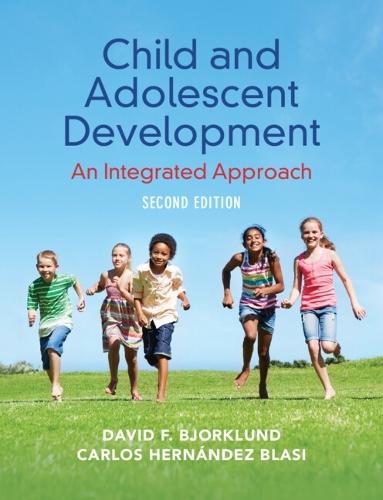
Only when we fully appreciate the origins and foundations of child and adolescent behaviors will we succeed in uncovering why they do what they do. By emphasizing evolutionary viewpoints of human psychological development, this textbook explains the fundamental underpinnings of young minds and how they grow. New chapters on the biological basis and cultural context of development introduce students to dynamic new debates in the field. The integrative, topical approach incorporates the perspectives that guide today's practitioners and gives students a holistic and up-to-date understanding of development. Box features highlight key debates, Section Reviews reinforce essential points, and “Ask Yourself” questions and end-of-chapter exercises encourage engagement and extend learning, supporting and enhancing student understanding. Revised and updated throughout, this comprehensive, topical textbook uniquely integrates the central themes of modern developmental theory – developmental contextualism, sociocultural perspective, and evolutionary theory – in a strong, theoretical introduction to child and adolescent development.
Full Product Details
Author: David F. Bjorklund (Florida Atlantic University) ,
Carlos Hernández Blasi (Unversitat Jaume I)
Publisher: Cambridge University Press
Imprint: Cambridge University Press
Edition: 2nd Revised edition
Weight: 1.654kg
ISBN: 9781009363532
ISBN 10: 1009363530
Pages: 726
Publication Date: 04 December 2025
Audience:
College/higher education
,
Professional and scholarly
,
Tertiary & Higher Education
,
Professional & Vocational
Format: Paperback
Publisher's Status: Active
Availability: Manufactured on demand

We will order this item for you from a manufactured on demand supplier.
Reviews
'A masterful and comprehensive overview of all aspects of development, with delightful pictures and accessible explanations of biological, cognitive, and cultural factors. Each chapter contains informative text boxes and diagrams that hold the reader's attention throughout. This engaging text will inform any contemporary developmental psychology course and should be foundational reading for all of them.' Usha Goswami, University of Cambridge 'A delightful, captivating introduction to the greatest research findings on children's development from around the world. Not only are up-to-date controversies presented side by side with established knowledge, but evolutionary and proximate mechanisms that underlie development are suggested, bringing developmental psychology into the realm of real science. I don't know of a better book for anyone interested in how children develop.' Joyce Benenson, Harvard University 'This text helps students achieve the most difficult level of critical reasoning by giving them practical ways to apply scientific reasoning to all facets of human development and existence. In this age of scientific skepticism, this book teaches what is needed now more than ever.' Marc Lindberg, Marshall University
Author Information
David F. Bjorklund is Professor of Psychology at Florida Atlantic University, USA. He has served as Associate Editor of Child Development (1997–2001) and as Editor-in-Chief of the Journal of Experimental Child Psychology (2007–2024) and currently serves as Series Editor for Cambridge Elements in Applied Evolutionary Science. Carlos Hernández Blasi is Professor of Psychology at the Universitat Jaume I of Castellón, Spain. He has enjoyed an international career, serving as a visiting professor and invited lecturer at several institutions, including the Max-Planck Institute for Psychological Research, Florida Atlantic University, the University of Oxford, and Aalborg University.