Awards
- Winner of PROSE (Chemistry/Physics) 2012
Overview
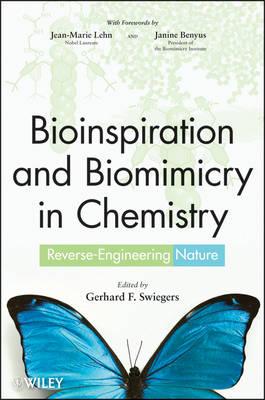
Can we emulate nature's technology in chemistry? Through billions of years of evolution, Nature has generated some remarkable systems and substances that have made life on earth what it is today. Increasingly, scientists are seeking to mimic Nature's systems and processes in the lab in order to harness the power of Nature for the benefit of society. Bioinspiration and Biomimicry in Chemistry explores the chemistry of Nature and how we can replicate what Nature does in abiological settings. Specifically, the book focuses on wholly artificial, man-made systems that employ or are inspired by principles of Nature, but which do not use materials of biological origin. Beginning with a general overview of the concept of bioinspiration and biomimicry in chemistry, the book tackles such topics as: Bioinspired molecular machines Bioinspired catalysis Biomimetic amphiphiles and vesicles Biomimetic principles in macromolecular science Biomimetic cavities and bioinspired receptors Biomimicry in organic synthesis Written by a team of leading international experts, the contributed chapters collectively lay the groundwork for a new generation of environmentally friendly and sustainable materials, pharmaceuticals, and technologies. Readers will discover the latest advances in our ability to replicate natural systems and materials as well as the many impediments that remain, proving how much we still need to learn about how Nature works. Bioinspiration and Biomimicry in Chemistry is recommended for students and researchers in all realms of chemistry. Addressing how scientists are working to reverse engineer Nature in all areas of chemical research, the book is designed to stimulate new discussion and research in this exciting and promising field.
Full Product Details
Author: Gerhard Swiegers ,
Jean-Marie Lehn (Nobel Laureate) ,
Janine Benyus (President of Biomimicry Institute)
Publisher: John Wiley & Sons Inc
Imprint: John Wiley & Sons Inc
Dimensions:
Width: 16.40cm
, Height: 3.20cm
, Length: 24.00cm
Weight: 0.885kg
ISBN: 9780470566671
ISBN 10: 0470566671
Pages: 512
Publication Date: 07 December 2012
Audience:
Professional and scholarly
,
Professional & Vocational
Format: Hardback
Publisher's Status: Active
Availability: Out of stock

The supplier is temporarily out of stock of this item. It will be ordered for you on backorder and shipped when it becomes available.
Reviews
As a resource for chemists, the main advantage of this book is this diversity, which makes it stand out from more specific discussions of e.g. biomimetic materials chemistry. In this sense, the book would provide a good reference to someone new to the field or as part of a reading list for a course on biomimetics and bioinspiration in chemistry. In addition, for readers who have worked in one area of biomimetic chemistry for some time, this book is broad enough to give some interesting insight into some very different chemistries. (Angew. Chem. Int. Ed, 1 August 2013) As such, it holds a unique place in the literature, and would be best suited for advanced students or researchers interested in this area. Summing Up: Recommended. Graduate students, researchers/faculty, and professionals/practitioners. (Choice, 1 August 2013)
As a resource for chemists, the main advantage of this book is this diversity, which makes it stand out from more specific discussions of e.g. biomimetic materials chemistry. In this sense, the book would provide a good reference to someone new to the field or as part of a reading list for a course on biomimetics and bioinspiration in chemistry. In addition, for readers who have worked in one area of biomimetic chemistry for some time, this book is broad enough to give some interesting insight into some very different chemistries. ( Angew. Chem. Int. Ed , 1 August 2013) As such, it holds a unique place in the literature, and would be best suited for advanced students or researchers interested in this area. Summing Up: Recommended. Graduate students, researchers/faculty, and professionals/practitioners. ( Choice , 1 August 2013)
As such, it holds a unique place in the literature, and would be best suited for advanced students or researchers interested in this area. Summing Up: Recommended. Graduate students, researchers/faculty, and professionals/practitioners. ( Choice , 1 August 2013)
Author Information
GERHARD F. SWIEGERS, PhD, is a professor of chemistry at the University of Wollongong in Australia. His research focuses on taking inspiration from and learning from Nature in fields including self-assembly and catalysis. He has authored widely cited works that highlight the similarity of self-assembly in chemistry and biology. He has also been responsible for illuminating important fundamental aspects of chemical and biological catalysis, with significant implications for the rational design of bio-inspired catalysts.