|
|
|||
|
||||
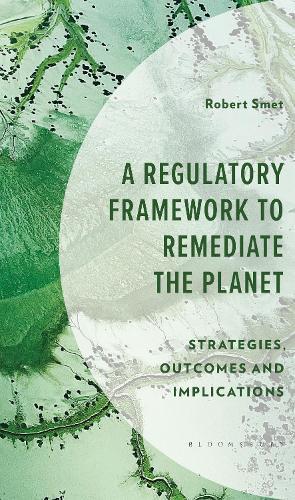
OverviewUbiquitous environmental pollution and how we regulate it is now a more critical issue than ever. A Regulatory Framework to Remediate the Planet: Strategies, Outcomes and Implications develops an optimal regulatory strategy to minimize human-generated environmental harms by the generation of multi-media pollution and postulates a means to use this strategy “in reverse” to restore Nature’s ecosystems. The strategy first includes reforming key aspects of the Clean Air Act, using the core strategy to likewise regulate the generation of solid waste pollution, and facilitate the transition to a circular economy. The author shows that this core strategy will holistically regulate the generation of multi-media environmental pollution, i.e., air, water, onsite generated waste, and solid waste pollution. He further argues that these outcomes are only possible through the intelligent use of rigorous, limit-based regulation, employing the proper blend of command-and-control and market-based instruments, rooted in an underlying structure that can be applied as a regulatory strategy across all environmental media. Full Product DetailsAuthor: Robert SmetPublisher: Bloomsbury Publishing Plc Imprint: Rowman & Littlefield ISBN: 9781666947755ISBN 10: 166694775 Pages: 400 Publication Date: 08 January 2026 Audience: Professional and scholarly , Professional & Vocational Format: Hardback Publisher's Status: Forthcoming Availability: Manufactured on demand Table of ContentsPreface Acknowledgments Abbreviations Introduction Part 1: Prepping for Regulatory Surgery Chapter 1: The Fundamentals of Regulating Air Pollution Chapter 2: The Inherent Design Flaws of Regulating Stationary Sources Under the Clean Air Act Chapter 3: Past Discussion of Clean Air Act Reform Part 2: The Comprehensive Strategy Chapter 4: A New Framework for Regulating Air Pollution from Stationary Sources Chapter 5: Insights and Commentary on the Comprehensive Strategy Part 3: The Adapted and Generalized Strategies Chapter 6: Adapting the Comprehensive Strategy to the Generation of Solid Waste Pollution Chapter 7: Generalizing the Strategies to the Generation of Multi-Media Environmental Pollution Chapter 8: Commentary on and Implications of the Adapted and Generalized Strategies Part 4: Pursuing a Grand Unified Theory of Environmental Law and Regulation Chapter 9: Expanding the Use of the Strategies Chapter 10: The Implications for Environmental Law Conclusion BibliographyReviewsAuthor InformationRobert Smet, PhD, is an Environmental Protection Engineer. Tab Content 6Author Website:Countries AvailableAll regions |
||||